

This post contains affiliate links please see the Disclosure and Privacy Policy page for full disclosures here.
Disclaimer: I received a FREE copy of this product through the HOMESCHOOL REVIEW CREW in exchange for my honest review. I was not required to write a positive review nor was I compensated in any other way.
For the last month or so, C has been using a new curriculum in the afternoons from the Wisdom Wonder Project called Little Wonders Preschool. This curriculum is a book and play based curriculum for young learners. We used the Jr. Kindergarten curriculum for C. The Little Wonders Bundle includes Block Play, Literature, and Little Masters (their art program).
Planning
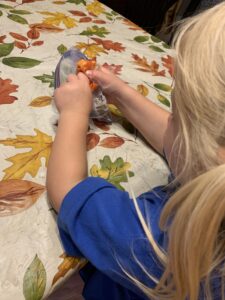
This curriculum does take a bit of planning to use. You will need to get a book for Block Play, 4 books for Literature, and a book for Little Masters (they are listed on the website before you download so you can plan for the month). These books are the basis for the activities for each section. They give you a few activities to do each day for the different parts of the bundle. Each of these activities are written out in detail for you to read through and plan. The Block Play has approximately 1 activity per day (some days have none and some have to read the book and do an activity). The Literature section has 3 or 4 activities a day (one activity every day is to read the book and then there are 2 or 3 more things to do that day as well) and the Little Masters is approximately 1 activity a day (some have no activities while others have two). This gives you plenty of activities for your little one to be engaged. We did not follow the schedule exactly because we did this curriculum in the afternoon during D’s nap or as a family in the evening. Some activities had small pieces (such as the blocks I bought and the mapping activity we did from Block Play) and others needed my full attention to watch C (such as painting with liquid starch and tissue paper and vegetable sorting). So I picked a few activities (usually from one collection) to focus on each day. A few activities we let D participate in such as mixing paint in ziplock bags and nature walks. The great thing about homeschooling is that you can make it what you need and can handle. It is all about flexibility. This curriculum does make it pretty easy to be flexible with because there is a wide variety of activities, which I discuss below.
There are also some basic supplies you will need to go ahead and gather, including: a block set, paint (watercolors and regular washable paint), containers for paint, brushes, sensory bins, journal, printer, ink, etc. These are basic supplies you will need for most of the activities. I did go and buy a wooden block set, but everything else I used what I had at home.
You will need to print out (or read on your computer) the curriculum which does take a lot of ink to print. I printed two pages per sheet to save on paper and ink.
One of the major issues with planning was deciding what level C was at. In many curriculums, she is in a preschool level but in other curriculums she is at a kindergarten level (homeschool problems, right). There are some samples as the bottom, but I would have liked to see more of a comparison. It was hard because each level is represented but in different parts of the curriculum making it difficult to compare. I would have liked to have a side by side sample of a specific activity that changes between levels to see the differences. You only get ONE download a month, so knowing these differences can be very important. I ended up putting her in Jr. Kindergarten. It seemed to fit, but I did add to the curriculum to make it a bit more engaging.
Activities
There is a large variety of activities for your child to participate in using this curriculum.
The Block Play Collection has vocabulary, mapping, building, puzzles and shapes, and extension activities all based off a book. The vocabulary is mixed into the other activities but highlighted at the top of the collection for you. The mapping activities are not only to teach map skills, but also directional terms and the child’s understanding of the world around them.
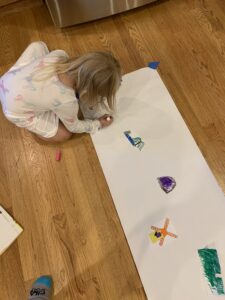
One of my favorite activities was a mapping activity. C was supposed to draw the different parts of a farm using a book. I did not make her do this because drawing can be difficult as she is only 3 years old. It told me I could make copies of the different parts from the book but with my little home printer/copier (it is almost 15 years old), I couldn’t do this. I ended up finding some color pages online to cut apart and make the different pieces. C colored them and then we glued them on our paper to make our map. I would have loved these to be provided as I am not one that has time or energy to draw and I did not like having to find outside sources (I was happy I could find an outside source for free).
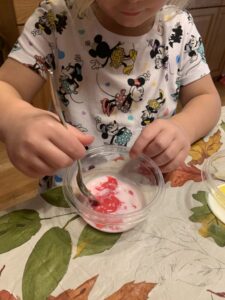
In the Little Masters Collection, there is another book for all the activities. There are activities relating to the elements of the month (a basic concept of art such as line, shape, form, etc.), vocabulary, exploring color, specific artists, and a famous work. We did a really cool activity where we mixed paint with milk to make it thinner so that it was easier to make new colors. She thought this was super funny. I did have to be very clear that even though there was milk in the paint, it was not food!
The Literature Collection is a weekly (all the rest are monthly) curriculum. There is a book a week and each book has a variety of activities to accompany it. There are art, block (or math), sensory, food, nature, fine motor, and journaling activities for each book. We did a mixture of activities based on time and materials that we had at home.
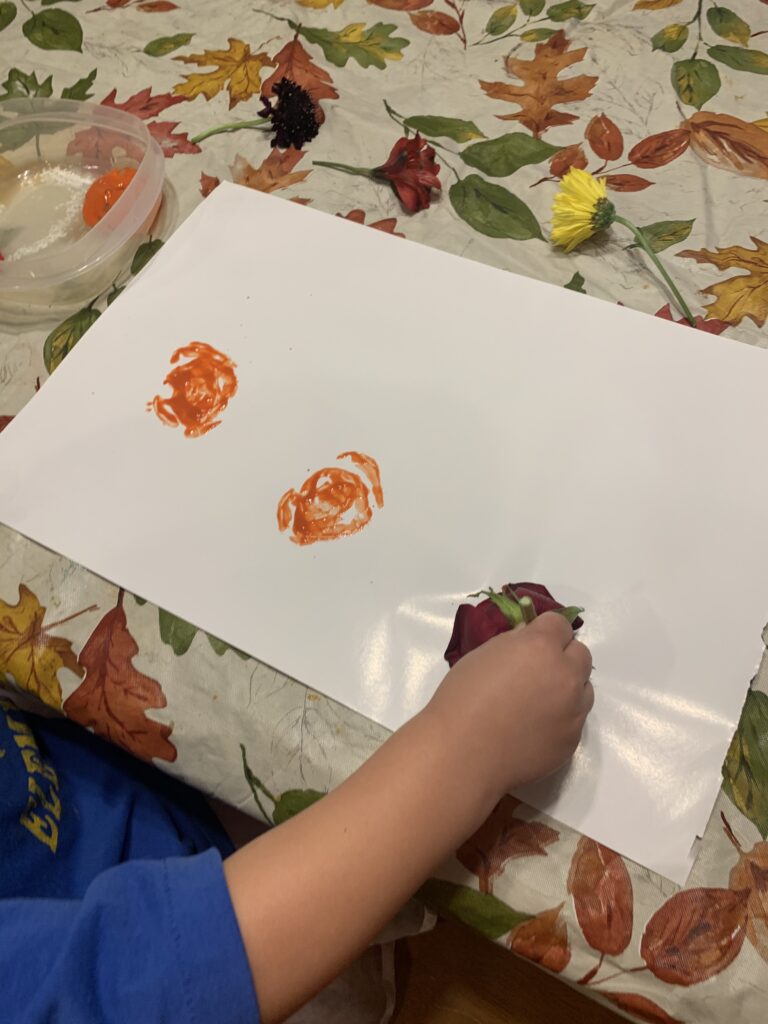
We did a few of the art activities with the different books. C loved painting with flowers for Chrysanthemum and vegetables for the Tale of Peter Rabbit.
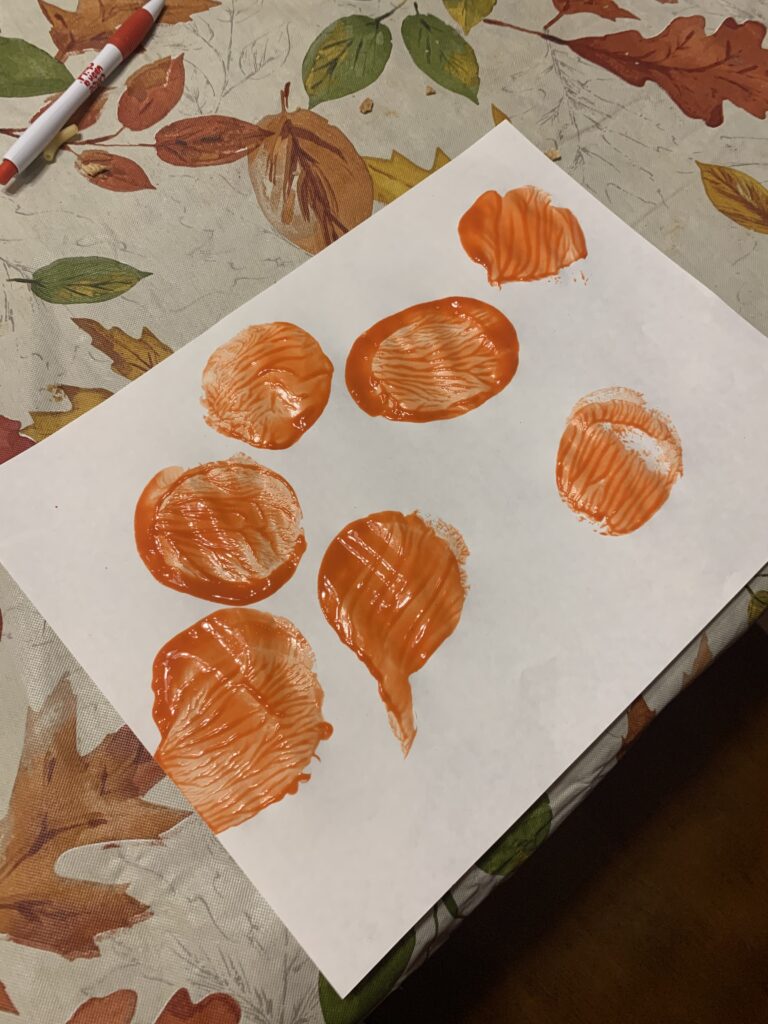
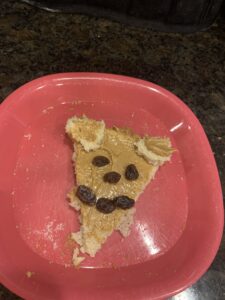
We also liked the food activities. We made toast to look like Chrysanthemum’s face. C thought this was silly. We also made some Japanese Red Bean Ice Cream. It was pretty good.
We did not do the sensory and journaling activities for multiple reasons. The sensory projects required a lot of extra items that were not in our budget. I did find some alternative projects for us to do instead of these. For example, with the book Yoko we were supposed to make play dough sushi using red play dough (gave you the recipe), rice, seaweed snack, a knife, and a cutting board. I chose not to spend the money on these items, but instead found a craft where we built sushi out of construction paper. We did not do the journalling activities because I don’t really like doing journals yet with C. She is 3 years old and there was a lot of freehand drawing and extra steps needed that we didn’t really have the time for in our setup. I did take a few of those ideas to do an alternative activity. For example, instead of journaling about what a friend is with The Adventures of Beekle we just talked about what it means to be a friend. Yet again, the joy of homeschooling is being flexible. We might come back and do journalling another month after C matures a bit.
Overall Thoughts
I thought this curriculum was a very well thought out play based curriculum. It was not a good fit for our family because it took a lot of planning on my end and gathering supplies. I did not like that I needed to buy a ton for each week. We ended up skipping activities or finding something similar online because I could not afford to add more supplies or groceries to our budget. If you do not have a strict budget or if you are really good at coming up with alternatives then it might work for your family. Even though this curriculum had a ton of play activities, I felt like I needed to add to it to make it more complete. I like doing play based activities, but I also like have some worksheets or crafts or something similar for concrete learning. I would have liked more extensions for the activities into concrete learning. There was an activity where we sorted vegetables, it would have been nice if they had provided a cut and paste activity to go along with it or a chart I could print out (ready to go) for her to graph and then write the numbers underneath. Or for the journalling if they had provided a sheet for C to draw on or a picture to color I might have printed it out and added to a journal later. I just wanted a bit more so that I can show others what she is learning.
One thing that I did like was the recommended books to help extend learning. Right now we are not going to library but once every other week (and with lack of planning on my part) we did not take full advantage of this part. I could have gotten more books to help us extend our week. If you were using this as your only curriculum or as the basis of your curriculum, I highly suggest doing this.
I think this curriculum is a great curriculum for young learners, just not for our family. I hope you read other reviewers opinions about the Wisdom Wonder Project below to get a full picture of this curriculum.







Great review, Alyssa! Another beauty of homeschooling is finding the curriculum that fits YOUR family. This is a great fit for our family, and I plan to use it for several years. It can be costly, but like you, I did find alternatives to a few activities. I had to modify some for Zeke since he is on the young side, but I loved the book choices!
Great review, Alyssa! Another beauty of homeschooling is finding the curriculum that fits YOUR family. This is a great fit for our family, and I plan to use it for several years. It can be costly, but like you, I did find alternatives to a few activities. I had to modify some for Zeke since he is on the young side, but I loved the book choices!