This post contains affiliate links please see the Disclosure and Privacy Policy page for full disclosures here.
Sensory skills help a rising homeschool kindergartener take in and make sense of the world. These skills come through touch, taste, smell, sight, hearing, movement, and balance.
For a young child learning at home, sensory skills build the base for reading, writing, and focus. They’re not just a checklist. They’re how kids grow through everyday play.
A rising homeschool kindergartener learns best through fun, hands-on activities. That’s why I love using sensory play as part of our daily rhythm.
Below, I’ll share some of my favorite ways to support these skills at home.
Visual Skills
Visual skills are key for a rising homeschool kindergartener. They help a child see differences and follow objects with their eyes.
One part of this is visual discrimination. That means noticing shape, size, color, or pattern differences. It’s how kids tell a square from a circle—or match puzzle pieces just right.
Another part is visual tracking. This helps a child follow a moving object or scan words across a page.
Strong sensory skills, like these visual ones, lay the foundation for reading, writing, and problem-solving. They even boost higher thinking skills later on!
Favorite way to develop these skills: Fill a sensory bin with random objects and have your child sort the objects on their own. Once they are sorted, you can ask your child how they sort them and then challenge them to sort the objects a different way. You could also have them set up a sorting bin for a younger sibling because they will have to determine how many objects are in each pile and then mix them up.
Another favorite way to develop these skills: Give your child a piece of paper or a shallow tray and fill it with a filler such as rice. Give your child an object or have them find one and drag it through the rice. As they drag it through they should see the trail the object leaves behind. You can expand this to asking them to draw or write certain things on the tray.
Auditory Skills
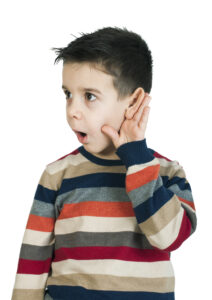
Auditory skills help a rising homeschool kindergartener listen, learn, and respond. These skills have two main parts—auditory discrimination and auditory processing.
Auditory discrimination means hearing differences in sounds. Like telling “cat” from “cap.”
Auditory processing means using those sound differences to understand the world. It’s how kids make sense of what they hear.
These sensory skills build the base for language. They help with vocabulary, following directions, and joining conversations.
Strong auditory skills let a rising homeschool kindergartener feel confident when listening and speaking.
Favorite way to develop these skills: Create a rainforest sound sensory bin by placing dried beans in a sensory bin and adding jingle bells (or chimes). You can add rainforest animals and plants (fake leaves and plastic greenery) for extra play. As your child plays, you can discuss the different sounds in a rainforest and how the sensory bin represents these sounds.
Tactile Skills
Tactile sensory skills help a rising homeschool kindergartener learn through touch. These skills involve feeling and exploring different textures.
Tactile discrimination means noticing what’s rough, smooth, bumpy, or soft. It helps children tell materials apart and decide how to use them.
This kind of sensory play starts early. But it grows even more in the preschool years.
Your child should begin to describe how things feel. They might say, “This is sticky!” or “That’s scratchy!”—and also know how to use those items in real or imaginative play.
Fine motor skills also play a role (read more about those here). But for now, we’re focusing on how touch helps your child make sense of the world.
Tactile sensory skills for a rising homeschool kindergartener refer to anything they touch. They need to be able to discriminate between different textures as well as use their small muscles to manipulate different items (aka fine motor skills-read about those here). I am going to focus more on the discrimination in this post. Tactile discrimination can start early but also can be honed in later preschool years. Your child should be able to start to describe the differences and similarities between materials to you as well as how to use those materials in the world (imaginative and real).
Olfactory (Smell) Skills
Olfactory skills help a rising homeschool kindergartener tell smells apart. These sensory skills involve noticing, comparing, and describing scents.
We all smell things a little differently. That’s why olfactory skills can’t be “taught” in the same way. But children can still grow in their ability to describe what they smell.
Your child should be able to tell the difference between good and bad smells. “This smells sweet!” or “That smells yucky!” are great signs of progress.
These sensory skills help with more than just smell. They play a big role in how we taste food too! As your child grows, these skills support safety, preferences, and even memory.
Favorite activity to develop these skills: Set up a smelling station. Soak cotton balls in different substances (lemon juice, chocolate syrup, strawberry juice or extract, mint extract, cinnamon, etc.) and place them into different containers that are opaque. You then have your child close their eyes and hold each one up to their nose. Have them sniff them! They then will describe the smells to you while trying to guess the substance.
Gustatory (taste) Skills
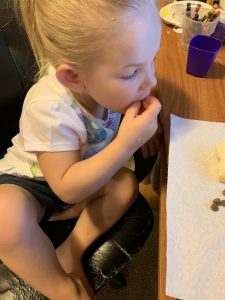
Gustatory skills help a rising homeschool kindergartener taste and tell the difference between foods. These sensory skills focus on flavor and preference.
Your child doesn’t have to like every food. But they should notice differences—sweet, sour, salty, bitter.
They should also be able to describe what they taste. “This is too sour!” or “I like this—it’s sweet!”
It’s even better when they can say if they liked it or not. That shows awareness and self-expression.
Gustatory skills are hard to teach, but they matter. They help kids grow into confident, healthy eaters.
Favorite activity to develop these skills: A taste test (read about when we did this here)! Set up different items to taste. You can do this blindfolded or not. Have your child describe the items in regard to how they taste. You can also have them put them in order of which ones they liked the best to the ones they liked the least.
Integration of Skills
The most important sensory skill for a rising homeschool kindergartener is using multiple senses at once. This is called sensory integration.
It means taking in sights, sounds, smells, touches, and tastes—and making sense of it all. Then, responding in a way that fits the situation.
This takes time and practice. But with support, your child can grow in this skill.
One of the best ways to build sensory skills is through activities that use many senses at once. Baking is a great example!
In baking, your child uses:
- Visual skills to read and watch how things mix.
- Gustatory skills to taste ingredients or test the final result.
- Olfactory skills to smell when something is done—or not!
- Tactile skills to measure, mix, and handle ingredients.
- Auditory skills to hear timers or listen for cooking sounds.
All of these work together to help your rising homeschool kindergartener succeed.
Other activities work too! Not every one has to use every sense. Even combining two or three can help build strong sensory skills.
Favorite activity to practice these skills: Setup a sensory storytelling activity. Have your child pick a story and find props around your house to help tell the story (your child can read the story and look at the pictures to figure out what types of props will be needed). If your child can read, have them record themselves reading the story, if not you can record yourself reading the story. As you play the story back, have your child act out the story. You could also add music or food to the story as props. This allows your child to use multiple senses to retell the story.
Want to Read More?
- Check out Children’s Hospital of Richmond at VCU’s article about how to develop your child’s sensory skills.
- Check out Action for Children’s article on Sensory Play.
- Check out Only About Children’s article on benefits of sensory play.