This post contains affiliate links please see the Disclosure and Privacy Policy page for full disclosures here.
Even though we typically think of science and social studies as subjects we start in kindergarten, there are some skills you can work with your rising homeschool kindergartener to set them up for success. These skills are easily taught through day-to-day life or books or exploring, but they are essential to help your child have a foundation for science and social studies.
Want to read about other skills on the overall checklist, click here.
Understand the difference between past, present, and future.
Understanding time can be tricky for a rising homeschool kindergartener. At this age, children don’t fully grasp how time works or how it passes. But even so, it’s a wonderful opportunity to begin introducing them to the concept in meaningful ways.
One great starting point is helping children recognize and sequence events—both in their family life and in the world around them. Talking about what happened in the past, what’s happening now, and what might happen in the future helps build this foundational understanding.
In our home, we often use family relationships to explore these ideas. For example, we talk about who was born first, second, and third among our children. We also mention that Daddy is older than Mommy—by just two months, but it’s a fun fact we never let go!
We go even further by explaining who Grandma and Grandpa are in relation to Mommy and Daddy. These kinds of discussions help children see that grandparents came first, then parents, and then themselves. It’s a simple, personal way to help them visualize the passage of time.
We’ve also been blessed to have multiple great-grandparents in our lives. My oldest child even met her two great-great-grandmothers! These connections make the abstract idea of time more tangible, helping our children understand their place in a bigger story.
Practical Idea: Help your child make a timeline of specific events in your family. Include dates and pictures to help. Also, discuss (based on your child’s personality) about what the future looks like for them. What do they want to be when they grow up? Where do they want to live? Will they go to college somewhere away from home? All of these are great ideas to start having discussions about at a young age, but remember if your child is sensitive to these issues you might want to proceed with caution.
Identify different aspects of the environment around them.

This science and social studies skill for your rising homeschool kindergartener focuses on recognizing physical features in the environment. These include everyday sights like buildings, trees, bodies of water, and roads.
Learning to identify these elements is more important than it might seem. It lays the groundwork for understanding maps and geography later on. When children know what features look like in real life, they’re better equipped to recognize and interpret them in drawings or photos.
You don’t need fancy tools or lessons to teach this concept. A simple nature walk is a perfect place to start. As you stroll, point out different things you see—“Look at that tall building,” or “That’s a pond with ducks in it.” These casual observations help make connections.
Even during a drive, you can talk about the landscape around you. Mention bridges, hills, or rivers. These natural, easy conversations are a powerful way to build your child’s awareness of their surroundings—and they make learning feel fun and effortless.
Practical idea: If you want to further your child’s understanding of this concept, you can draw a map and have them find items in the neighborhood or even have them draw the map for you. This won’t be detailed but still a great way to start.
Develop awareness of the community members around them.
One essential social studies skill for a rising homeschool kindergartener is understanding who makes up their community. It’s important that children know not only who lives and works around them, but also who they can turn to for help if needed.
In our home, we always include a unit on community helpers during preschool and kindergarten. These lessons are not only fun—they’re incredibly practical, too. We focus on the helpers most children recognize, like firefighters, police officers, and doctors.
But we also make sure to highlight the less obvious helpers. Grocery store clerks, mail carriers, and sanitation workers play vital roles in our everyday lives. It’s helpful for children to learn about these people and understand the jobs they do.
As your child becomes more familiar with the world around them, knowing who’s in their community gives them confidence. It also helps them feel safer and more connected as they begin to explore beyond the home.
Practical idea: Make cards or cookies for your local firefighters or police officers and take them in. They will love it and you can introduce your child to these community helpers in real life. Just make sure you call ahead to see what they can and can’t accept.
Show curiosity about the world around them.
This foundational skill in science—and even in social studies—is a cornerstone for your rising homeschool kindergartener. It’s all about observing and questioning the world around them, a habit that sets the stage for a lifetime of learning.
Encouraging your child to ask questions is the first step. Whether it’s something they notice on a walk, in your kitchen, or while reading a book, let their curiosity guide the conversation. Questions like “Why is the sky blue?” or “Where does mail go?” are perfect starting points.
As a parent and teacher, it’s important to respond with enthusiasm. Let your child know that no question is too small or silly. This builds their confidence and encourages a love for learning.
Finding answers together can be a wonderful bonding experience. You can explore books, use child-friendly websites, or conduct simple experiments at home. When learning becomes interactive, your kindergartener not only gains knowledge—they build trust and joy in the process.
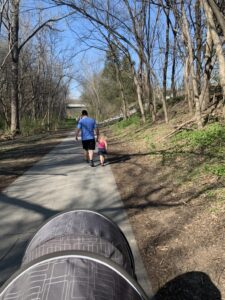
Practical idea: Go on a nature walk at a local, state, or national park. As you walk around, ask your children about what they see. Then model asking questions about what you are observing. If you truly don’t know the answer to these questions, show them when you get home how to find the answer.
Participate in simple science experiments, like observing plants and animals.
This skill builds on the previous one, but with more emphasis on hands-on learning. It introduces your rising homeschool kindergartener to the basics of conducting a science experiment and walking through the steps of the scientific method.
Start with a question. It can come from your child or be prompted by you—something simple and curiosity-driven. For example, “How do plants grow?” is a fantastic place to begin.
Once you have your question, do a little research together. Read books, look at pictures, or explore kid-friendly websites. This stage helps create a basic understanding and leads into forming a hypothesis—a thoughtful guess about what might happen.
Your child might say, “I think the sun gives plants all the food they need, and the soil just holds the seed.” That’s a great hypothesis, even if it’s not completely accurate. The goal is to think critically and make predictions.
Next comes the experiment! Set up a few different plant scenarios: one seed in both soil and sun, one in just soil, and one in just sun. As the days go by, encourage your child to observe the changes and record them in a journal, perhaps with daily drawings or notes.
After observing for a while, it’s time to draw a conclusion. Your child might notice that the seed with both sun and soil grew the best. This is a rewarding moment of discovery!
Finally, have your child communicate the results. This could be a simple show-and-tell with their journal, or a fun presentation they put together for the family. Either way, it builds confidence and reinforces what they’ve learned through science.
Practical idea: Seed planting is super fun and you can observe so many different things about plants from planting seeds in different conditions. Look up a few seed experiments online and let your child pick one or pick a question they might have. You could also have your child look through some books on seeds and plants and ask them what questions they might have to determine how to create an experiment.
Explore cause-and-effect relationships in everyday activities.
Understanding cause-and-effect is one of the most basic and important concepts in science, and it’s something every rising homeschool kindergartener should begin to grasp.
Cause-and-effect means that one action leads to another result. It’s as simple as noticing that when you do something, something else happens because of it. Thankfully, this idea is easy to teach because it shows up in everyday life.
For example, “Mommy pours milk into my cup, and now I have milk to drink.” Or, “I push the door, and the door opens.” These small moments are great teaching opportunities, showing your child how one thing can directly affect another.
You can reinforce this concept during play, meals, or even clean-up time. Look for chances to say things like, “When we turn off the lights, the room gets dark,” or “When you stack blocks too high, they fall.” These real-life examples make science both relatable and fun.
Practical idea: Grab a set of dominoes and have your child help you set them up close together so that when one falls over the rest will too! Help your child a few times and then have them do it on their own. Talk about why theirs worked or didn’t work!
These science and social studies skills on this checklist are essential building blocks for your rising homeschool kindergartener. They provide a strong foundation for the learning and growth that will happen in the years to come.
Remember, just like any skill, these don’t need to be mastered all at once. Your child is on a learning journey, and progress often happens in small, meaningful steps.
Some skills might click right away, while others take a bit more time. That’s perfectly okay. With gentle guidance, consistent practice, and lots of encouragement, your child will grow more confident and capable every day.
If you have any concerns, check out these ideas:
- Refer to Practical Ideas: Firstly, consider the practical advice provided above. These insights are from a former preschool teacher who transitioned into homeschooling.
- Practice Regularly: The adage “practice makes perfect” applies here. Model for your child the different skills by asking questions and identifying what you see around you! The more you model, the more your child will start to understand these concepts.
- Read Books: Grab books from the library about different aspects of your community and the world around you and your child! Grab books on different subjects your child has questions about! Learn with your child!
- Seek Professional Guidance: Here is a great website from the Colorado Office of Early Childhood that can help you determine what skills are needed for your child at what stage. Should concerns persist, don’t hesitate to consult your child’s pediatrician. They can connect you with appropriate resources that can support your child’s growth. A different perspective or additional practice might make a significant difference.