This post contains affiliate links please see the Disclosure and Privacy Policy page for full disclosures here.
Language arts skills are essential for a rising homeschool kindergartener. These early abilities form the foundation for everything your child will learn in kindergarten and beyond.
They include both verbal communication and pre-reading skills—like recognizing letters, understanding sounds, and following simple directions.
The good news? Most of these skills are developed naturally through play. Singing songs, reading stories, and having everyday conversations all help strengthen your child’s language development.
As your preschooler grows into a rising kindergartener, focusing on these core language arts skills will give them a confident, joyful start to their homeschool journey.
Use and understand basic vocabulary and simple sentences
Your rising homeschool kindergartener should have a solid grasp of basic vocabulary. This includes colors, numbers, shapes, animals, common objects, and names of family members.
They don’t need to read these words yet. But they should recognize them when spoken. For example, if someone asks, “Where’s your daddy?” they should be able to point him out.
One helpful safety tip—teach your child your actual name. If they ever get lost, it’s more helpful for them to say “My mommy is Alyssa” instead of just “mommy.”
In addition to vocabulary, your child should also understand simple sentences. This includes both instructions and basic statements.
If someone says, “Your mommy is wearing a blue shirt,” they should be able to agree or say, “No, it’s red.”
These everyday language skills are key for confident communication as your child starts homeschool kindergarten.
Practical Idea (number 1): As you read any book, point out different shapes, colors, common items, etc. to your child. As they start to understand, you can transition to asking them where these items are on the page.
Practical Idea (number 2): You can create a family book with real pictures and the person’s name on the bottom. You can have your child use this to learn everyone’s name and how they are related.
Know how to engage in conversations
One of the key language arts skills for your rising homeschool kindergartener is learning how to have a conversation.
They should be able to respond to simple questions with relevant answers. This shows they understand what’s being asked and can communicate clearly.
Conversations also help build vocabulary. The more your child talks and listens, the more words they learn—laying the groundwork for future reading success.
These everyday interactions are small but powerful steps in language development.

Practical Idea: Narrate your day. As you narrate your day, ask questions. Have your child ask others questions while you are out and about. You might have to guide these questions, but it is a start. To build vocabulary, you can ask your child what something means or if they know what an item is and how to use it. This allows for open-ended answers.
Following 2 Step Directions
This might not seem like a language arts skill—but it absolutely is. For a rising homeschool kindergartener, following two-step directions builds critical thinking and early reading skills.
When children follow directions like “Pick up your shoes and put them by the door,” they’re learning how to process information in sequence.
This helps them later with blending letter sounds and understanding how words fit together.
It’s also a great way to grow vocabulary. You can include new or descriptive words in your directions to introduce them in a real-world context.
Practical Idea: Make up crazy two-step directions to see if your child can follow. For example, put the shoes on your head and then put your socks on your hands. This will make them stop and listen. Also, build up to two or three or more step directions.
Identify some letters (names and sounds)
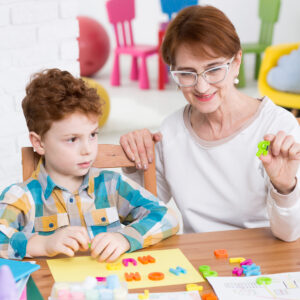
This language arts skill for a rising homeschool kindergartener is the heart of pre-reading.
The best place to start is with their name. These letters are personal and easier to recognize. Have your child say the letters out loud. Use name puzzles, sensory trays, or write their name together to help them identify each letter.
Once they know the letters, begin adding the sounds. Studies show that learning letter names and sounds together can make it easier for kids to master both.
This simple practice builds a strong early reading foundation.
Practical Idea: You can use my Letter Crafts, Alphabet Coloring book, and Letter Sensory Mats and Bins to practice these skills. These are great hands-on approaches to learning their letter names and sounds.
Begin to recognize familiar words
This skill can be a little tougher, but it’s still part of the language arts journey for a rising homeschool kindergartener.
Your child might not be reading yet, but they can start recognizing familiar words in books or out in the world.
Start by pointing out signs—like their favorite restaurant or store—as you drive by. Over time, switch it up and ask, “What do you see?”
They begin to “read” by recognizing the shape and look of the word. This builds a strong base for learning high-frequency words later on.
Practical Idea: Read a book over and over to them (which is usually easy). Start to leave out words or say the wrong word. Then when they correct you, you can point to the word. This will start the recognition process.
If you have any concerns, check out these ideas:
- Refer to Practical Ideas: Firstly, consider the practical advice provided above. These insights are from a former preschool teacher who transitioned into homeschooling.
- Practice Regularly: The adage “practice makes perfect” applies here. Model for your child the different skills by asking questions and identifying what you see around you. The more you model, the more your child will start to understand vocabulary and other pre-reading concepts.
- Read Books: Grab books from the library about different aspects of your community and the world around you and your child! Grab books on different subjects your child has questions about! Learn with your child!
- Seek Professional Guidance: Here are two great websites from the Colorado Office of Early Childhood on Language Development and Literacy Skills that can help you determine what skills are needed for your child at what stage. Should concerns persist, don’t hesitate to consult your child’s pediatrician. They can connect you with appropriate resources that can support your child’s growth. A different perspective or additional practice might make a significant difference.