This post contains affiliate links please see the Disclosure and Privacy Policy page for full disclosures here.
Kindergarten readiness through play is not only possible—it’s powerful. You don’t need worksheets or flashcards to get your child ready. In fact, too much of that can get in the way.
There’s a big myth that kindergarten prep has to look like formal school. But for young kids, play is the best way to learn. (Caveat: if your child wants to do worksheets that is okay too)!
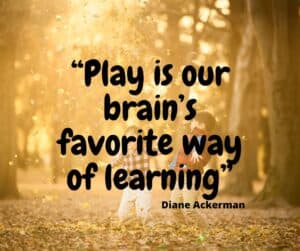
As author Diane Ackerman puts it, “Play is our brain’s favorite way of learning.” I couldn’t agree more!
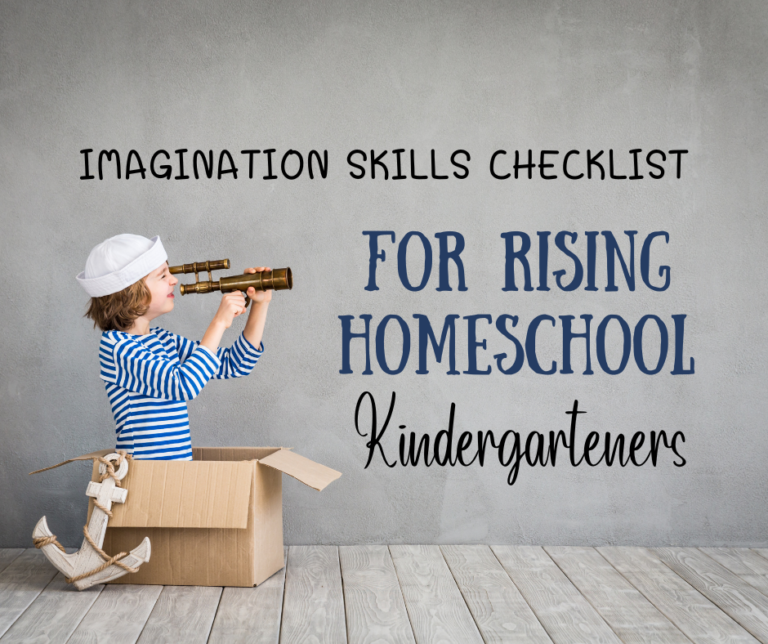
If you’re wondering what skills your homeschooler needs before starting kindergarten, I’ve created a full checklist to guide you. Click on the image below.
Why Use Play?
According to a study in the Journal of Applied Developmental Psychology, researchers found a strong connection between time spent playing at home and a child’s self-regulation. That self-regulation, in turn, supported early prereading and math skills a year later.
The study concluded: “These results suggest that play may be an important tool in efforts to boost children’s school readiness skills in the short term and their healthy development in the long run.”
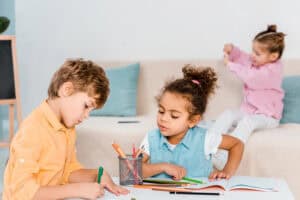
Put simply—play is how children learn, and it shapes them for life.
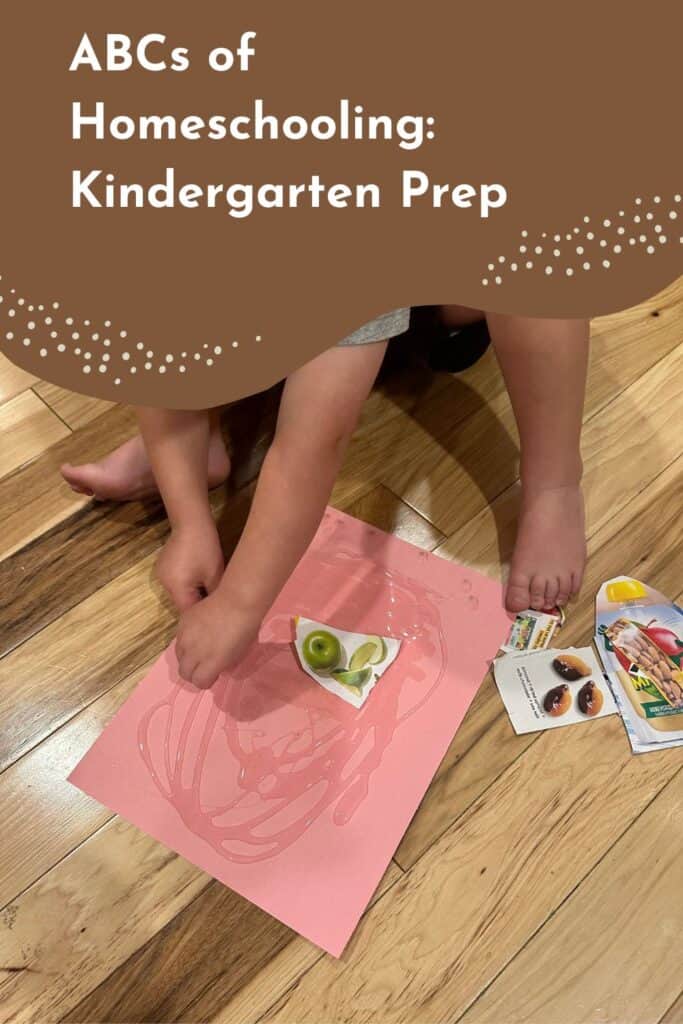
Whether your child is running around outside, building with LEGOs, or getting messy with paint and scissors, they’re learning.
These activities all support critical areas of development: fine and gross motor skills, language, early math, social interaction, and emotional growth. This is exactly why kindergarten readiness through play is not just effective—it’s essential.
Simple Play Activities for Active Learning
Here are a few easy, low-prep ways to build kindergarten readiness skills through play—no worksheets required!
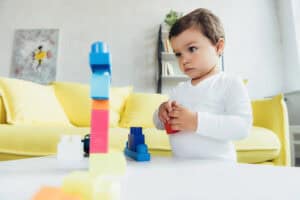
- Building with Blocks – Supports math thinking, spatial awareness, and fine motor skills.
- Playing Dress-Up – Encourages imagination, emotional expression, and social role-playing.
- Helping Cook – Builds math (measuring, counting) and language skills through real-life learning.
- Sorting Laundry – Great for classifying, color recognition, and building independence.
- Running and Playing Outside – Develops gross motor skills, emotional regulation, and social confidence.
- Playing with Playdough – Strengthens hand muscles and engages the senses.
- Driving Toy Cars Together – Boosts motor coordination and creative storytelling.
These simple activities are probably already part of your day and with a playful mindset, these everyday moments become meaningful learning opportunities!
Let Go of the Guilt: Trust the Process
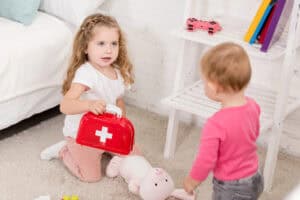
You don’t need to recreate a classroom in your living room. Homeschooling and traditional school are two very different experiences—and that’s a good thing.
By simply playing with your child or observing your child, you’ll naturally see which kindergarten readiness skills are already developing and where they might need a little support.
If you’re feeling unsure about where to begin, check out J is for Just Beginning where I walk you through how to get started with homeschooling.
Most of all, enjoy your child. Give them the freedom to play, explore, and learn at their own pace. They’ll pick up the skills they need—right on time.
Kindergarten prep doesn’t have to mean pressure. With a playful mindset and a little intentionality, your child can grow the skills they need through everyday fun.
So take a deep breath, trust the process, and enjoy this season of curiosity and connection.
Want a simple way to track your child’s progress? Check out my full post: Skills Checklist for a Rising Homeschool Kindergartener. It’s the perfect companion to your play-based homeschool journey.