This post contains affiliate links please see the Disclosure and Privacy Policy page for full disclosures here.
Water sensory bins are a great way to introduce yourself and your preschool child to sensory play. They are very easy and can be adapted in many ways. I have even learned some tricks over the years on how to contain the mess. Check out my other top sensory bins here.
How to Setup a Water Sensory Bin
There are two major ways we have setup a water sensory bin. One is inside in a small tub and one is outside either in our tubs or in our water table. It depends on the time of year and what we are doing which one we do.
Inside Sensory Bin
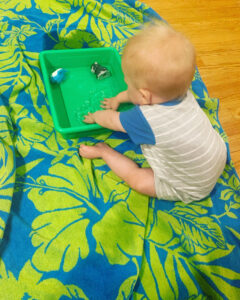
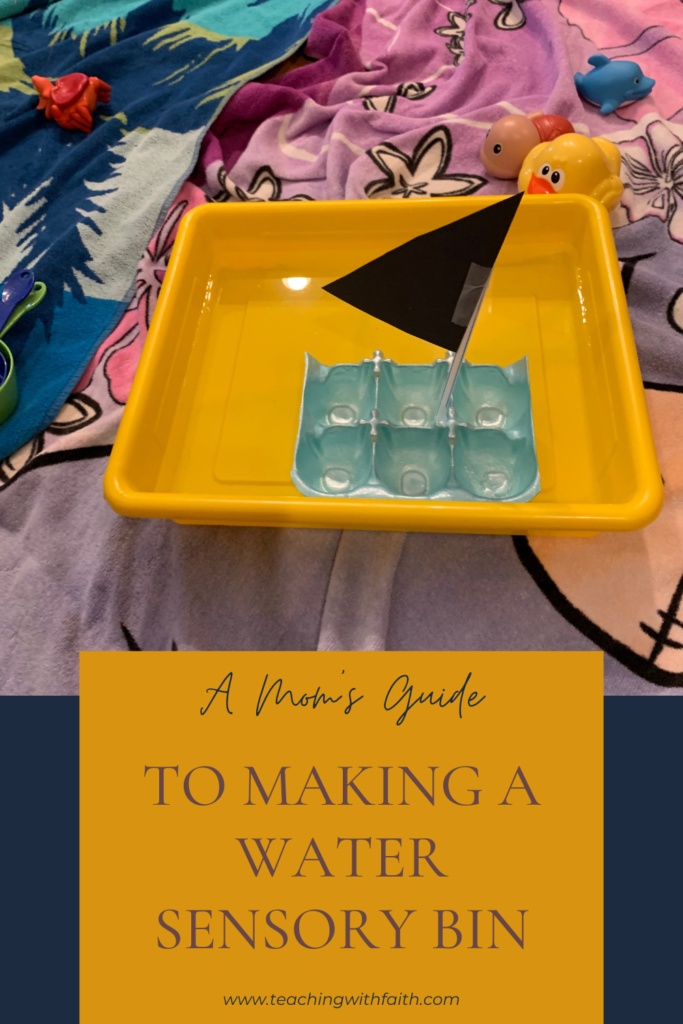
Inside, I use our sensory bins and just fill them with water. I usually fill them pretty full so that my kids can play for a long time. When my youngest is playing with my older two kids, I do not fill his as full because he has been known to just dump it!
Most of the time when I set up a water sensory bin it is just free play. I let them go get toys and they just play. They know to ask me beforehand if it is a good toy for water or not. But sometimes we do some learning activities with water. Keep reading for my learning activities with water.
Outdoor Sensory Bin
So when it is a bit warmer outside, but not warm enough for the pool, we will set up some water sensory bins outside. I have done this one of two ways, either in our normal sensory bins or in our water table. One time my boys played with how quickly they could pour the water out by just using cups. It was fun. They raced the water down the driveway. My daughter used to love it when I would color the water and she would just take toys out there and play!
How to Contain the Mess Inside
So one of the reasons we go outside sometimes is to not have to worry about containing the mess. It is easier to just let them dump water everywhere when they are outside. I usually put them in some easy clothes to change or their swimsuits and let them play. I will sit there and watch and give suggestions as needed. But sometimes that isn’t possible. So to contain the mess inside, I put down a few beach towels in the kitchen. I usually do one towel per sensory bin we have out. With younger children, you might need to double the towel, but if my youngest dumps the water, we just go get more towels to clean it all up. I have also taught them how to clean up the water and they help me. I do not clean all on my own. My philosophy is that if you make the mess you can help clean the mess! Even as a young toddler, they have to help clean up the mess.
Water Sensory Bin Themes
Sometimes we do sensory bins with themes. This can be for a concept we are working on or just for fun. One of the themes, we have done before is colored water. It is super simple, just color the water. Another one of our favorite themes is the ocean. This one is usually dyed blue water with ocean animal toys added. This one is fun because they can pretend either to be a scuba diver and see all the animals or they can set up a different habitat with certain animals in certain areas (usually have some dry land areas or even adding some ice to help with this). They can add “decorations” to their bin with the coral and other items.
Learning with Water Sensory Bins
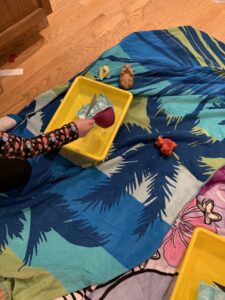
We have done a couple of different kinds of learning water sensory bins. One of my favorites is sink or float. We gather up toys from around the house to see which ones sink or float in water. Sometimes we play the game of can we make it sink! I can expand upon this by talking about the scientific method and walking them through making predictions and testing those predictions. As they get older, we will make charts and graphs with which ones floated and sank.
Another of our favorite activities is doing a pour station. This one is great for those children learning about different volumes of water. We start with a smaller amount of water and pour it into other containers. We talk about why the water from some containers can fill some but not others. We discuss what is a pint, quart, gallon, etc. This is a great way to include younger siblings in an older child’s lesson.