This post contains affiliate links please see the Disclosure and Privacy Policy page for full disclosures here.
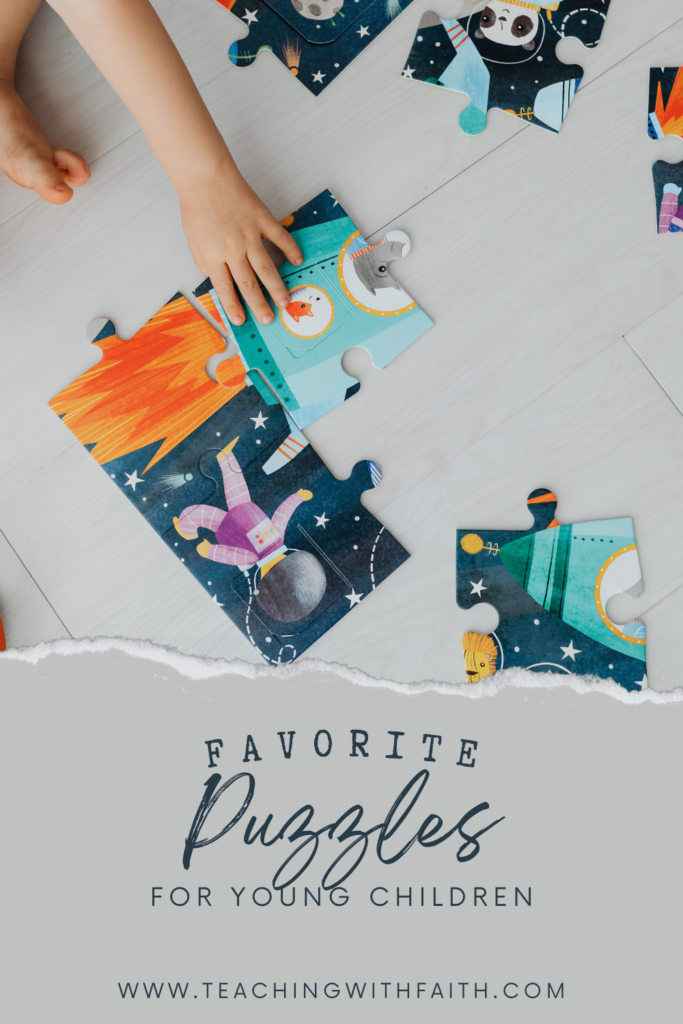
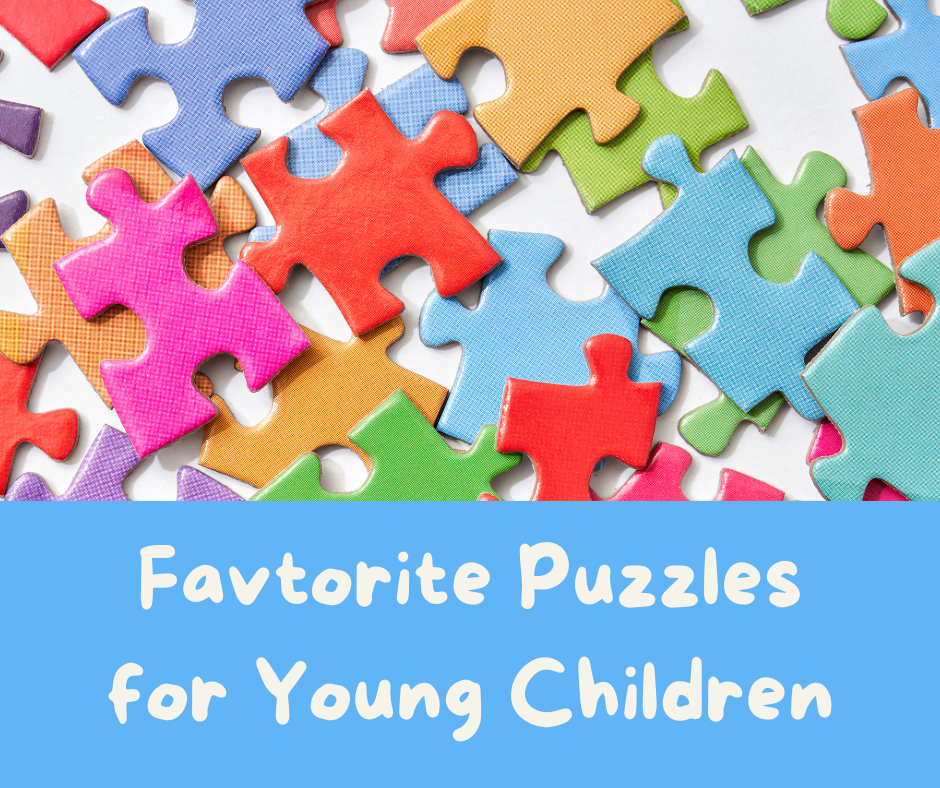
Puzzles for babies, toddlers, preschoolers and even early elementary children are a fantastic way to develop both their brains and bodies. They build problem-solving skills as the child has to think critically to figure out how the pieces fit together. They also enhance memory and recall skills, as children must remember where specific pieces go or what shape they are looking for. Additionally, figuring out how different shapes and patterns fit together strengthens their spatial awareness. Puzzles are especially great for fine motor development, as children work on grasping, manipulating pieces, and improving hand-eye coordination while placing the pieces. Here are my favorite types of puzzles, along with some examples of the ones we love in each category.

Babies and Toddlers
This age group loves chunky, specifically shaped puzzles. These puzzles are great because children can easily manipulate the pieces and experience quick gratification when they fit them in place. Their larger size makes them easier to grasp, which helps develop small muscles in the hands. Babies and young toddlers can also begin to learn shapes and colors as they start recognizing familiar patterns. By narrating as they work on the puzzle, you can help build their vocabulary. Some puzzles even include music, enhancing the experience by engaging multiple senses and aiding in matching the pieces.


I always start with the chunky puzzles and slowly move to the smaller wooden piece puzzles
My favorite puzzles for this age are:
Melissa & Doug Musical Instruments Sound Puzzle
Melissa & Doug Animals Jumbo Knob Wooden Puzzles Set – Fish and Pets
Melissa & Doug Farm Animals Jumbo Knob Wooden Puzzle
Melissa & Doug Deluxe Jumbo Knob Wooden Puzzle – Geometric Shapes
Melissa & Doug Vehicles 4-in-1 Wooden Jigsaw Puzzles in a Storage Box
Melissa & Doug Construction Vehicles 4-in-1 Wooden Jigsaw Puzzles in a Box
Young Preschoolers
Young preschoolers can start moving into puzzles with more pieces, though they’re still fairly chunky. These puzzles can have up to 24 pieces and may be made of wood or cardboard, but the pieces are larger for easier handling. This helps them develop dexterity in their finger and hand muscles, while also building spatial awareness and memory/recall skills as they begin looking for specific pieces. Additionally, working with more complex puzzles encourages problem-solving and critical thinking, helping to enhance cognitive development and focus.
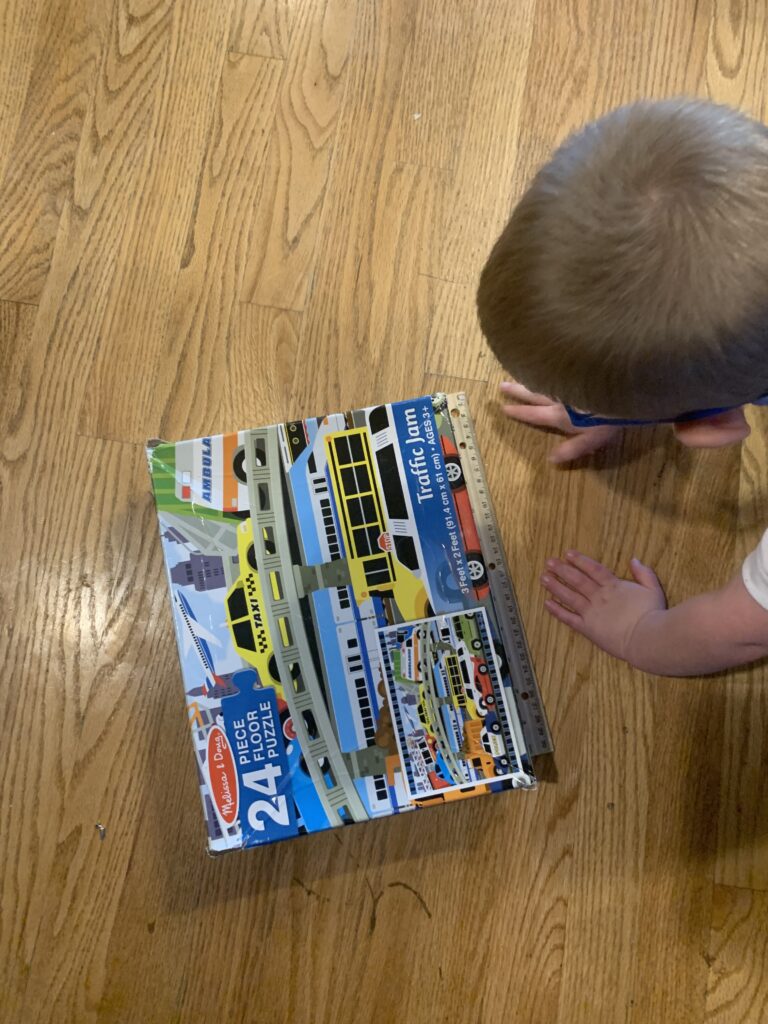
Once children really master these puzzles, you can also start to add in floor puzzles! Floor puzzles are some of our favorite puzzles.
My favorite puzzles for this age are:
The Castle Puzzle Preschool Educational Learning Toys Set
Farm Wooden Jigsaw Puzzles with Storage Tray
Construction Vehicle Jigsaw Puzzles
Melissa & Doug Traffic Jam Jumbo Jigsaw Floor Puzzle
Melissa & Doug Giant Fire Truck Floor Puzzle 24 piece
Preschoolers
Preschoolers can begin tackling even more complex puzzles. I often provide plenty of floor puzzles, which are great because the pieces are larger and easier to manipulate. However, be mindful when doing them on carpet, as the pieces can shift around more easily. As children become more confident, I gradually introduce smaller, ‘normal’ puzzles and increase the number of pieces as they master each level. This progression helps enhance their fine motor skills, improves their focus and attention span, and encourages problem-solving. Transitioning from floor puzzles to regular puzzles also boosts their ability to think more abstractly and strengthens their perseverance and patience.


My favorite puzzles for this age:
Peter Pauper Press Dinosaurs Kids’ Floor Puzzle (48 Pieces)
Melissa & Doug Land of Dinosaurs Floor Puzzle (48 pcs, 4 feet long)
Ravensburger Disney Princess Heartsong Glitter Jigsaw Puzzle
Ravensburger Railway Station Jigsaw Puzzle
Ravensburger Caribbean Smile – 60 Piece Jigsaw Puzzle for Kids
Older Preschoolers and Early Elementary
At this age, children can transition to traditional puzzles and gradually work up to larger and more complex sets with increasing numbers of pieces. Puzzles are a fantastic way to sneak in fine motor and cognitive skills practice without them even realizing it. As they manipulate smaller pieces, they continue to strengthen hand-eye coordination and fine motor control. These puzzles also boost cognitive development by challenging their problem-solving abilities, enhancing memory, and encouraging logical thinking. For older preschoolers and early elementary children, completing puzzles fosters patience and perseverance, as well as spatial reasoning. Additionally, puzzles can be a fun activity for the whole family, creating opportunities for teamwork and cooperative play.
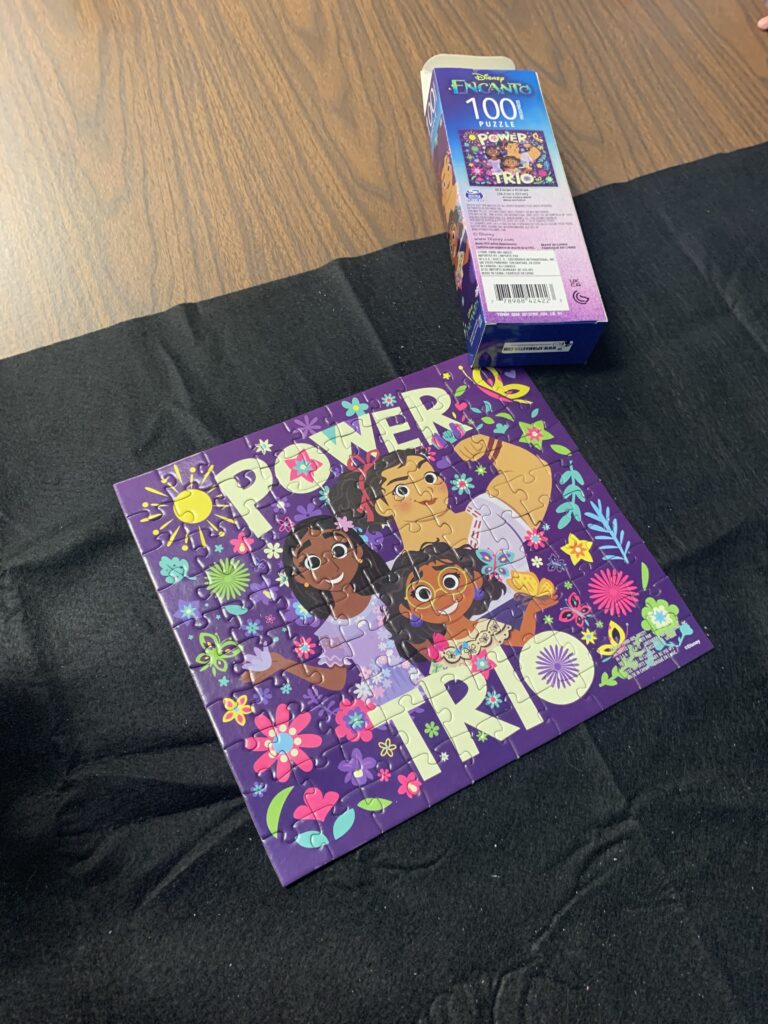

My favorite puzzles for this age:
Kellogg’s, Fun Pack Puzzles 6 Square Cereal Boxes
Ravensburger Super Mario – 100 Piece Jigsaw Puzzle
Chuckle & Roar – Adventure Awaits Puzzle
MasterPieces Safari Friends 100 Piece Kids Jigsaw Puzzle
Puzzles are a fantastic tool for building both fine motor and cognitive skills, from babies to early elementary children. As children grow, puzzles provide developmentally appropriate challenges that strengthen their hand muscles, improve dexterity, and enhance hand-eye coordination. At the same time, they foster essential cognitive abilities like problem-solving, spatial reasoning, and memory. Whether it’s a chunky puzzle for babies and toddlers or a more complex one for older preschoolers and elementary kids, puzzles offer endless opportunities for growth and fun. Plus, they make for a great bonding activity that the whole family can enjoy together.