This post contains affiliate links please see the Disclosure and Privacy Policy page for full disclosures here.
Homeschooling your toddler or preschooler can feel overwhelming. There’s so much advice out there, and not everything will work for your family.
But here’s the truth—you don’t have to have it all figured out. Every homeschool journey starts small.
J is for Just Beginning reminds us that starting is the most important step. Here are a few simple things to keep in mind as you take those first steps into homeschooling.
Why homeschool for the early years?
I love watching littles learn. They are like sponges—soaking up everything around them. These early years are full of wonder and growth.

Did you know that by the age of five, your child’s brain is fully grown? It’s not fully developed yet, but the growth that happens from birth to age five is incredible. So much learning happens in such a short time!
How amazing would it be to be the one guiding that learning—to be your child’s first teacher and see the world through their eyes?
5 Steps to Begin Homeschooling Your Toddler or Preschooler
Step 1: figure out your why?
The first step in homeschooling your toddler and preschooler is to discover your why.
Why do you want to homeschool? What matters most to your family?
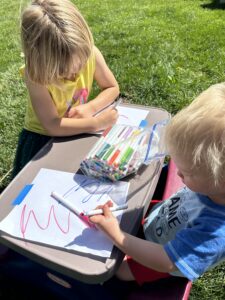
For us, our reasons are simple:
- Flexibility with time and curriculum
- Financial freedom
- One-on-one attention in learning
When you clearly list your reasons for homeschooling, it becomes your anchor. Your why will help you navigate challenges—whether it’s outside pressure from grandparents who don’t understand your choice, or internal struggles like your child learning to see you as both mom and teacher.
Knowing your why gives you confidence and direction as you begin homeschooling your toddler and preschooler.
Step 2: Set Up Your Homeschool
When it comes to homeschooling your toddler and preschooler, setup usually falls into two areas—time and space.
Time
I recommend using a routine instead of a strict schedule. Routines give structure without pressure. They help your day flow while keeping flexibility for those moments when life happens.
Here’s an example of what our day looks like (remember, I have older kids too, so yours might be much simpler):
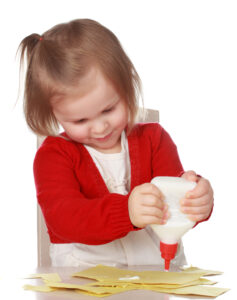
7:00 AM – Wake up and breakfast
Free play while I grab coffee
8:30/9:00 AM – Start school
10:00 AM – Snack time (touchpoint)
Finish school or free play
12:00 PM – Lunch (touchpoint)
1:00–4:00 PM – Rest time
4:00 PM – Snack (touchpoint)
Finish school or free play
6:00 PM – Dinner (touchpoint)
Evening free time
7:30 PM – Start bedtime routine
We use what I call touchpoints throughout the day. These are our consistent moments to pause, reset, and reconnect. They help us get back on track when things get busy or off schedule.
Space
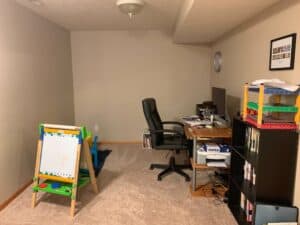
Your homeschool space doesn’t have to look a certain way. When you’re homeschooling toddlers and preschoolers, it’s all about finding what works for your family.
We’ve done it all—used a toddler table in the playroom, worked at the kitchen table, and even tried individual desks. Right now, my daughter prefers a desk in her room, while my toddler and I do most activities on the hardwood floor (easier to clean!).
Some families love having a dedicated homeschool room. Others make it work right in their living space. There’s no wrong answer here. What matters is that your space feels welcoming, practical, and easy to adjust as your children grow.
The key is to start simple, stay flexible, and remember—it’s perfectly okay to change things as you go.
Step 3: Understanding Your Child
When you’re homeschooling your toddler or preschooler, it’s important to understand how your child learns best. Every child is different, and most fit into more than one learning style.
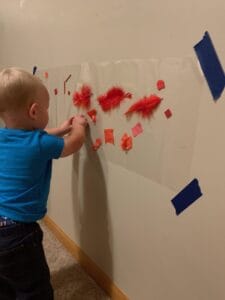
Here are the four main types of learners:
Kinesthetic Learner:
Learns best by doing and moving. Think sensory bins, crafts, building, or role-playing activities.
Visual Learner:
Learns by seeing. Think books, puzzles, drawing, or watching demonstrations.
Auditory Learner:
Learns by hearing. Think songs, storytelling, rhymes, and audiobooks.
Read/Write Learner:
Learns by seeing and doing. Think journaling, reading together, or writing and drawing their own stories.
There are online quizzes that can help you identify learning styles, but observation is often the best teacher. Watch how your child plays. What activities keep their attention the longest?
Offer a few different types of activities and see which ones they naturally choose. And when you’re unsure—present new material in more than one way! You might be surprised at what helps your child learn best.
Step 4: Choose a Curriculum (or Not)
The word curriculum can feel overwhelming when you’re homeschooling your toddler or preschooler. There are so many choices out there, and it’s easy to get lost in the options.

Here are some of the main types of homeschool curriculum:
Traditional Curriculum:
Follows a school-style approach with textbooks, workbooks, and teacher guides.
Charlotte Mason Curriculum:
Focuses on whole-child learning through living books, nature exploration, and the arts.
Classical Curriculum:
Builds on the ancient Trivium model—grammar, logic, and rhetoric—with strong focus on memorization and critical thinking.
Unit Studies Curriculum:
Teaches multiple subjects through one theme or topic, making it easy to include children of different ages.
Montessori Curriculum:
Encourages hands-on, real-world learning and independence.
Unschooling Curriculum:
Completely child-led—your child’s interests guide what and how they learn.
Waldorf Curriculum:
Integrates creativity, imagination, and practical life skills in a holistic way.
Eclectic Curriculum:
Mixes different approaches to create something that fits your family perfectly.
Personally, I lean toward a traditional approach but focus on hands-on learning with my littles.
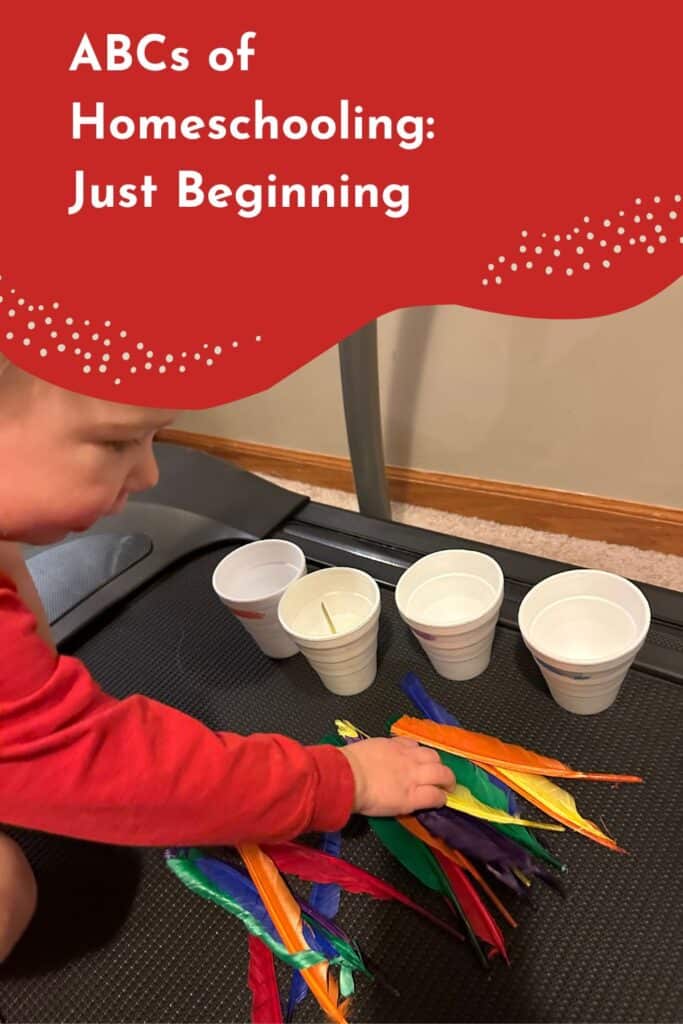
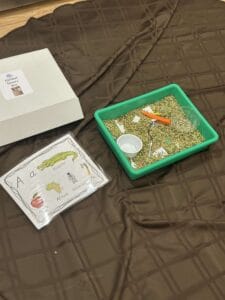
My Letter of the Week Curriculum is a great example—it includes traditional letter-learning ideas but through sensory play, crafts, and fine motor activities.
When you’re homeschooling toddlers and preschoolers, remember that the best curriculum is the one your child enjoys and that fits your family’s rhythm. Keep it simple and fun—because little ones learn best by doing!
Step 5: Evaluate and Don’t Burn Out
When you’re homeschooling your toddler or preschooler, it’s important to pause and see what’s working—and what’s not. The best way to evaluate at this age is through simple observation.
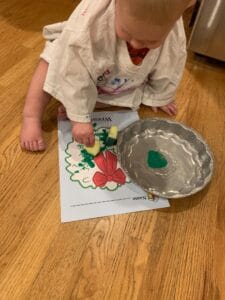
Watch how your child interacts with different activities. What do they love? What do they avoid? Keep more of what captures their attention and adjust or remove what doesn’t.
Pay attention to how they’re progressing through each skill. You might notice they understand some concepts easily but need extra time with others. That’s okay! You can adjust your activities to give more practice where it’s needed.
Also remember to include things they’re great at. Success builds confidence, and confidence keeps learning fun.
Burnout can happen to both you and your child. If you notice frustration, tears, or resistance, it might be time for a break. Step away for a while—go outside, take a walk, or plan a fun field trip day.
If you’re feeling overwhelmed trying to do it all, that’s your sign to slow down too. Choose something light and joyful to do together. Sometimes laughter and connection are the best lessons of all.
And if you ever need encouragement or fresh ideas, join our Hands-On Preschool with Teaching with Faith Facebook community. It’s full of parents who are on the same journey and ready to cheer you on!
Every homeschool journey starts with one small step. Whether you’re figuring out your why, setting up your space, or just finding your rhythm, remember—it doesn’t have to be perfect. You’re already doing something amazing by choosing to be present and intentional in these early years.
J is for Just Beginning reminds us that starting small still counts. Every story read, every craft made, and every moment spent learning together matters more than you know.

If you’re ready to take the next step and want more guidance, encouragement, and practical tools, my Foundations of Homeschooling Toddlers and Preschoolers Ebook and Workbook walks you through it all. It includes step-by-step lessons, reflection pages, and space to plan your homeschool journey with confidence.