This post contains affiliate links please see the Disclosure and Privacy Policy page for full disclosures here.
There are many kindergarten checklists out there, but not many focus on fine motor skills for homeschoolers. That’s why I created this kindergarten checklist for fine motor development—just for homeschool families.
Fine motor skills are incredibly important. They help your child use their hands and fingers to explore, play, and create. These small movements are essential for everything from holding a pencil to buttoning a coat.
This kindergarten checklist is a general guide. Don’t worry if your child isn’t doing all of these things yet. Every child grows at their own pace—and that’s okay.
If you want to read more about Gross Motor Skills needed for Kindergarten, click here.
Cut with Scissors
The first skill on our kindergarten checklist for fine motor development is using scissors. This is a big one!
Scissor cutting builds strength in many small hand muscles. It also helps with hand-eye coordination.
To teach proper technique, show your child how to place their thumb in the small hole. Then, have them put two or three fingers in the larger hole.
Make sure their thumb stays pointing up while they cut. This position gives them better control and helps avoid frustration.
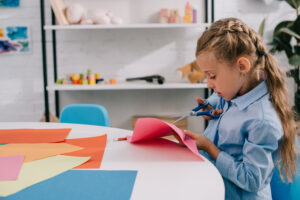
Practical tip: If your child is having issues cutting paper, cut playdough or kinetic sand!
My favorite scissors are these. Yes I know they are pointed, but all the blunt ones we have issues with actually being able to cut and this causes more frustration! If your child needs a bit more help these automatic spring scissors are great too or these hand over hand ones are great.
Pincher Grip on Pencils
Another key item on the kindergarten checklist for fine motor skills is pencil grip. Learning how to hold a pencil correctly is a big step for preschool and kindergarten kids.
The most common grip is the tripod grasp. This means pinching the pencil between the thumb and index finger, while the middle finger supports it underneath.
Some children do well by pinching near the top of the pencil with two fingers. Both grips help build control and comfort.
And this isn’t just for pencils! Your child will use the same grip for crayons, markers, pens, and other writing tools.
Practical Tip: Use small pencils and broken crayons to force your child to use a pincher grip if they are still using a fist.
My favorite pencils are these for littles because it forces them to write super small and the no eraser helps them not want to erase everything!
Copy or Draw Simple Shapes
Next on the kindergarten checklist for fine motor skills is drawing basic shapes. Think squares, circles, triangles, and rectangles.
This skill may seem simple, but it’s foundational. Before kindergarten, your child should be familiar with these shapes.
They might start by tracing. Then, they’ll move on to copying. Eventually, they’ll draw them on their own.
Don’t expect perfect shapes—especially not at first! A wobbly circle or a crooked triangle still counts as progress.
Practical Tip: Use a bowl or a cookie cutter to help them learn how to draw circles on their own. They can trace the outlines.
Fold and Tear Paper
Another fun activity on our kindergarten checklist for fine motor skills is folding and tearing paper. This one’s a favorite in our house!
Your child should be able to fold paper on their own. It doesn’t have to be perfect—what matters is doing it independently.
My kids love turning folded paper into little surprises for their friends. Sometimes they’ll do this several times a day!
Tearing paper is just as valuable. It strengthens the same tiny muscles used for holding a pencil and writing.
Plus, it’s a great way to combine creativity with motor skill practice.
Practical Tip: To teach tearing paper, start with tissue paper. This is easy to tear.
Here’s a simple way to teach paper folding:
Start by folding the paper yourself. Then, unfold it to show the crease. This gives your child a visual guide to follow.
Next, try drawing a line on the paper. Have them fold along the line with the mark facing up. It helps them see exactly where to fold.
As they get the hang of it, let their creativity take over. Folding turns into crafting—and crafting builds confidence.
Using a Glue Bottle
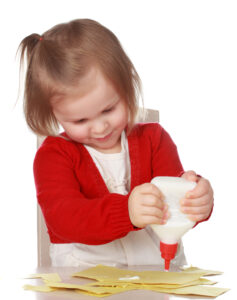
The last item on our homeschool kindergarten checklist for fine motor skills is using a glue bottle. And let’s be honest—what kid doesn’t love gluing?
Sure, it might lead to a few glue spots around the house (ask me how I know!). But learning to use glue is a valuable skill.
We talk about using “just a dot, not a lot.” It’s a fun phrase—and a helpful reminder not to soak the paper.
Gluing builds hand strength and teaches control. Plus, it opens up a whole new world of crafts and creative fun.
Practical Tip: Teach your child to trace with the glue first. This can be on any tracing worksheet. After the glue add fun items (corn kernels, rice, paper, etc) to make it look cute.
I have a super cute giraffe craft that is a great way to practice small dots of glue. Check it out here.
Each of these skills holds significant importance as children approach kindergarten, particularly within a home setting, where they have the autonomy to explore and ideate independently. However, what should you do if your child is facing challenges with their fine motor skills? Here are some strategies:
- Refer to Practical Tips: Firstly, consider the practical advice provided above. These insights are from a former preschool teacher who transitioned into homeschooling.
- Practice Regularly: The adage “practice makes perfect” applies here. Encourage your child to engage in fine motor activities regularly, as repetition leads to improvement over time.
- Explore Sensory Play: Sensory play can be immensely beneficial. For instance, setting up sensory bins with tissue paper can prompt tearing exercises, potentially leading to requests for paper and glue. This type of activity can enhance fine motor skills. Another idea is to create a sensory bin with cotton balls, alongside child-sized tweezers, spoons, and cups. Such activities can help build finger strength necessary for proper pencil grip.
- Seek Professional Guidance: Here is a great website from the American Academy of Pediatrics that can help you determine where your child’s level for any skill. Should concerns persist, don’t hesitate to consult your child’s pediatrician. They can connect you with appropriate resources that can support your child’s growth. It’s possible that a different perspective or additional practice might make a significant difference.