This post contains affiliate links please see the Disclosure and Privacy Policy page for full disclosures here.
This gross motor skills kindergarten checklist focuses on the big movements your child needs for balance, coordination, and confidence.
These skills are essential for success in homeschool kindergarten and beyond.
In this post, we’ll walk through simple ways to build these abilities and help your child feel strong and capable.
Looking for fine motor skills instead? Click here to read more.
Stand on One Foot
Balancing on one foot is a fun and functional part of the gross motor skills kindergarten checklist.
It helps with everyday movements like kicking a ball, skipping, and even getting dressed while standing.
You can teach this skill through playful activities. Hopscotch is a great choice—it gets kids hopping on one foot and practicing balance without even thinking about it.
Another fun option is popping bubbles with the raised foot. Let them hold onto a chair or wall if they need support. A bubble machine can make it even more exciting and hands-free for you.
Practical Tip: Have your child balance by putting a ball under their foot in the air. This gives them more support.
Walk Up and Down Stairs by Alternating Feet
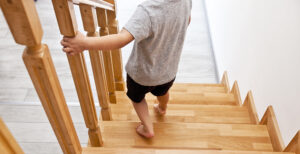
Climbing stairs is a key part of the gross motor skills kindergarten checklist. But for preschoolers, it’s harder than it looks.
Going up and down stairs while alternating feet takes balance, strength, and depth perception. It also depends on leg length and weight shifting.
Start by teaching your child to place both feet on each step. Once they’re comfortable, encourage them to try alternating feet—especially on the way down.
Always stay close while they practice to keep them safe and supported.
Practical Tip: If your child is having issues alternating feet, then you can put a sticker on one shoe and tell them to use the sticker foot or the non sticker foot or two different stickers and remind them which sticker to move.
You can also help you child by giving them a toy to hold and take up and down the stairs. This can give them something to focus on and only give them one hand to hold onto the rail.
Don’t have stairs? Use a soft playground or a small slide.
Kick a Ball
Kicking a ball is an important skill on the gross motor skills kindergarten checklist. It takes balance, coordination, and plenty of practice.
Start by letting your child kick while holding onto a wall or chair. The first few kicks might miss the mark—and that’s okay.
With time, they’ll learn to kick without support. From there, they can work on kicking a ball that’s rolling toward them.
This step is tricky. It requires timing and focus to connect with a moving target. But with encouragement and repetition, they’ll get it.
Practical Tip: Work on hand-eye coordination first with a game of catch or balloon tapping.
Observe your child while playing with a ball. See where they are at and provide support to them through guided exercises to learn how to kick.
Don’t forget that some simple cross body activities (such as hand games like Mrs. Mary Mack or even washing the car) can help with their coordination that is needed to kick a ball!
Throw a Ball Overhand
Throwing a ball overhand is another key skill on the gross motor skills kindergarten checklist.
It requires your child to swing their arm smoothly and time the release just right to get the ball moving forward.
Because little hands can’t grip large balls easily, start with something small—like a tennis ball. It’s easier to hold and helps them feel more successful from the start.
This simple activity builds strength, coordination, and confidence—all essential for kindergarten readiness.
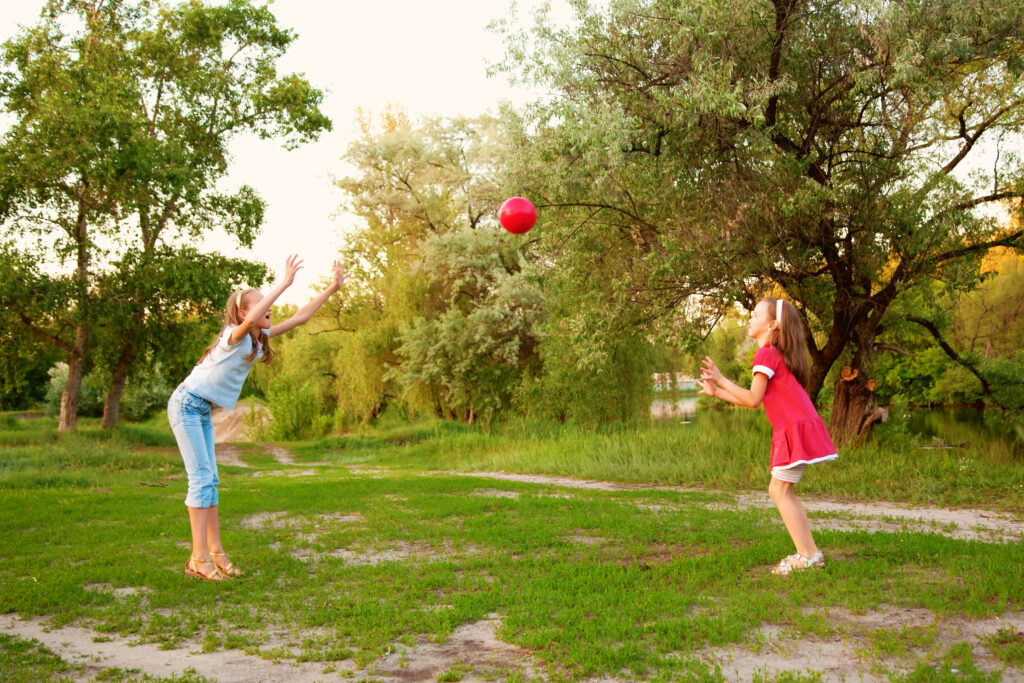
Practical Tip: You can set up “fair games” at home to help your child learn this skill and have fun practicing.
First your child will need to start by learning to roll the ball at a young age. This progresses to throwing. You can help your child by telling them to hold the ball at their ear and then throw it.
Walk Along a Line
Walking along a line is another important skill on the gross motor skills kindergarten checklist. It builds both balance and coordination.
The goal is to place one foot directly in front of the other while staying steady. At first, your child might step too wide or veer off to the side.
With practice, they’ll improve. Soon, they’ll be able to walk heel-to-toe along a line with focus and control—another step toward kindergarten readiness.
Practical Tip: Put a piece of tap on the ground and see if they can walk across it. Make it a game!
Each of these skills on this checklist holds significant importance as children approach kindergarten, particularly within a home setting, where they have the autonomy to explore and ideate independently. However, what should you do if your child is facing challenges with their gross motor skills? Here are some strategies:
- Refer to Practical Tips: Firstly, consider the practical advice provided above. These insights are from a former preschool teacher who transitioned into homeschooling.
- Practice Regularly: The adage “practice makes perfect” applies here. Encourage your child to engage in gross motor activities regularly, as repetition leads to improvement over time.
- Explore Outside Play: Being outdoors sparks your child’s desire to jump, kick, and play. You can nurture exploration and skill practice through playtime.
- Seek Professional Guidance: Here is a great website from the American Academy of Pediatrics that can help you determine where your child’s level for any skill. Should concerns persist, don’t hesitate to consult your child’s pediatrician. They can connect you with appropriate resources that can support your child’s growth. It’s possible that a different perspective or additional practice might make a significant difference.