This post contains affiliate links please see the Disclosure and Privacy Policy page for full disclosures here.
It can feel overwhelming to figure out how to teach letters to toddlers and preschoolers. Where do you even start? Should you use flashcards? Do they need worksheets?
While those tools can help some kids, I believe toddlers and preschoolers learn best through hands-on experiences.
Simple, sensory-rich activities can turn early phonics into something fun and engaging. Here are a few of my favorite ways to make learning letters exciting for your little one.
Why Hands-On Learning Matters in Early Literacy
Young children learn best by doing. They need to touch, move, build, and explore.
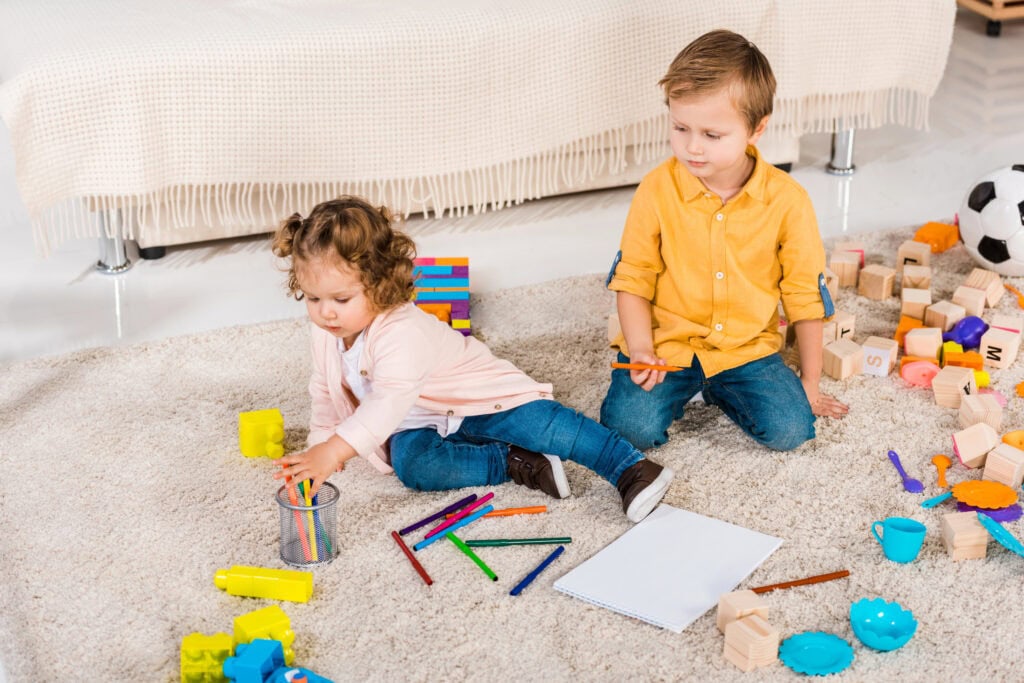
According to Goodwin University, “when a child engages in a learning activity that is hands-on and requires multi-tasking such as talking, listening, and movement, the greater the chances that multiple areas of the brain will be stimulated and develop.” This idea is supported by the work of education consultant Cindy Middendorf.
The more a child uses their whole body and mind to learn, the deeper that learning goes.
If we want to teach letters to toddlers and preschoolers in a way that sticks, we have to go beyond worksheets and flashcards. Those tools rely on rote memory, which doesn’t always last. Hands-on learning, on the other hand, lights up multiple parts of the brain.
It’s not just more fun—it’s more effective.
A Simple, Structured Way to Make it All Happen
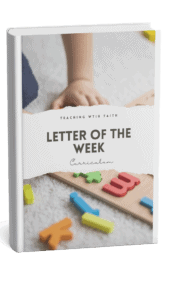
Trying to come up with hands-on activities for every letter of the alphabet can feel overwhelming. It’s not just the crafts—you’re also trying to weave in letter sounds, early math, science, and social skills.
It’s a lot to plan. But you don’t have to do it alone. That’s why I created Teaching with Faith’s Letter of the Week Curriculum.
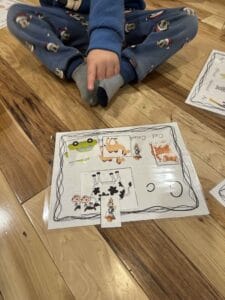
This curriculum gives you a simple, organized way to teach letters to toddlers and preschoolers—without the stress. Each week focuses on just one letter at a time, keeping it manageable and fun.
You’ll have four hands-on activities ready to go:
– A themed craft
– A sensory activity
– A snack or baking project
– And a fine motor skill activity
Each one is tied to the weekly letter and helps reinforce letter sounds in a playful way.
You can easily adapt the activities to fit your child’s pace. You can also use the activities to review previous letters, mix and match, or even involve siblings.
There are also preschool extension ideas for deeper learning. Whether you’re teaching one child or a few, this curriculum grows with your family.
Letter Crafts—Creative, Memorable, and Educational
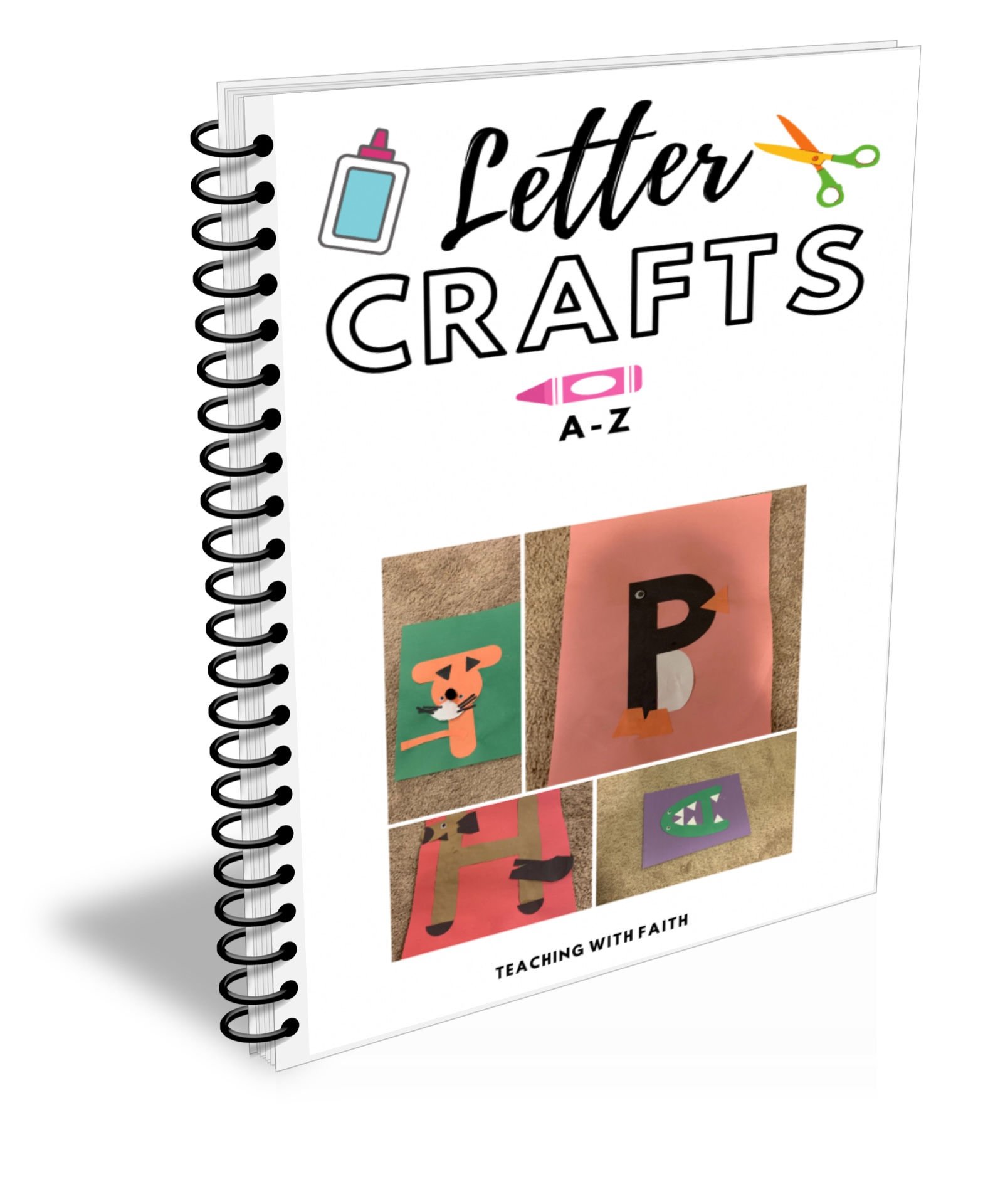
Letter crafts are one of the easiest ways to teach letters and letter sounds to toddlers and preschoolers. You simply give your child the cutout pieces and guide them through building a fun animal from the letter shape.
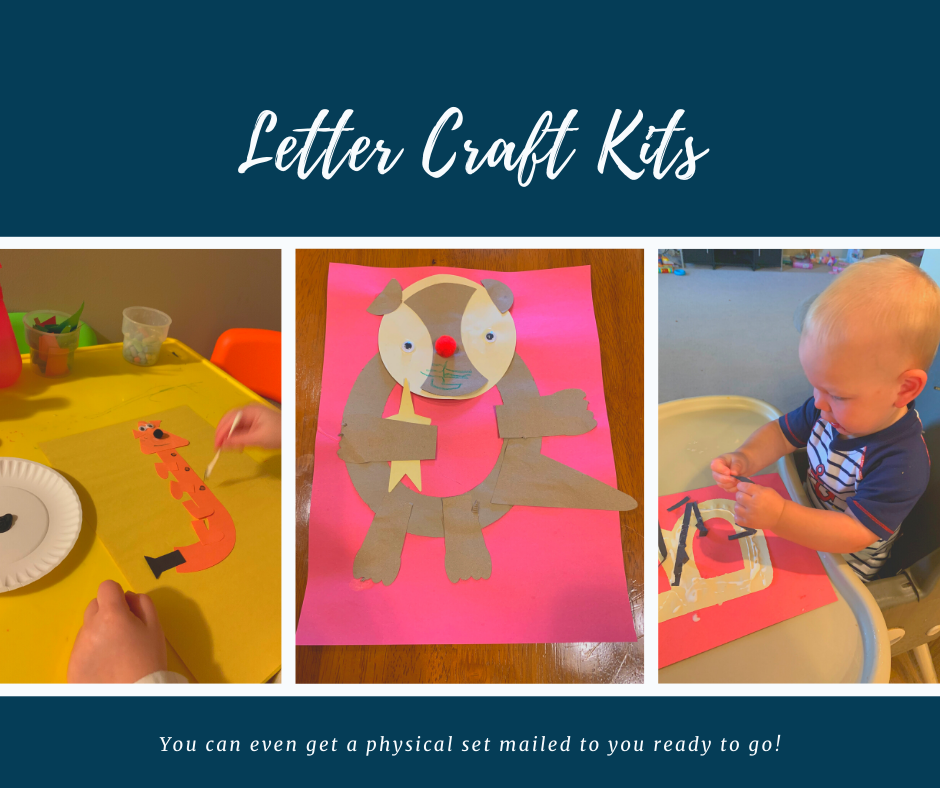
Each craft begins with the letter itself. As your child glues and assembles, you repeat the letter name and sound out loud. This helps them absorb it naturally—without pressure.
Your child can follow the example or make it their own. Either way, they’re learning while they create!
These crafts help build:
– Phonemic awareness as they connect the letter name and sound
– Fine motor skills as they cut, glue, and assemble
– Confidence and independence as they personalize their project
All of these crafts are included in the Letter of the Week Curriculum to make things even easier for you.
You can also get older siblings involved by having them model how the craft “should” look.
In our home, we’ve done the same letter crafts year after year. It’s such a joy to see how much my kids grow from year to year!
Sensory and Movement Activities Bring Letters to Life
I love sensory and movement activities. They’re one of the best hands-on ways to teach letters to toddlers and preschoolers. These kinds of activities keep kids engaged, curious, and excited to learn.
One of our go-to activities each week is the Alphabet Sensory Mats. I searched everywhere for a simple version online, but everything felt too complicated—so I made my own.
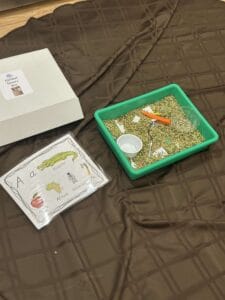
Each mat comes with matching cards that you hide in a sensory bin. As your child finds a card, you say the word and emphasize the beginning sound. It’s fun, low-prep, and easy to use for review by adding in letters from previous weeks.
Another favorite activity for the letter C is painting with cars. Kids roll toy cars through paint and across paper to create colorful tracks. As they play, you narrate what they’re doing and highlight the letter sound. This is a great way to connect learning with something they already love—especially if you have a little car enthusiast at home.
For the letter S, we use a snow sensory bin. This can be real snow (great on super cold days) or homemade snow for families who live in warmer climates. As your child explores the texture, builds snowmen, and engages in pretend play, you can talk about the letter S and the sounds it makes. They’re learning through sensory discovery, imagination, and vocabulary.
These are just a few of the hands-on activities included in my Letter of the Week Curriculum. They make it easier to bring playful, purposeful learning into your home. The more areas of the brain we can stimulate, the deeper and longer-lasting the learning will be.