This post contains affiliate links please see the Disclosure and Privacy Policy page for full disclosures here.
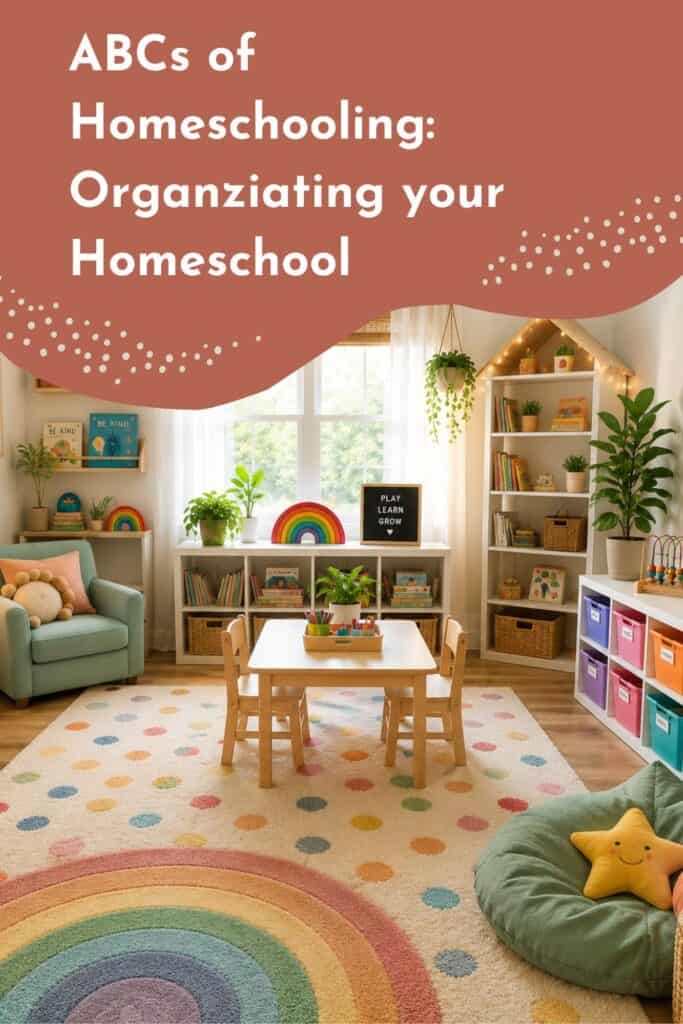
Homeschool organization can feel overwhelming. There is so much to think about when you are trying to organize your home and your homeschool day.
You may be wondering where to keep the art supplies, books, and curriculum. You may also be trying to figure out how to organize your day so you can actually get everything done.
There is a lot of information out there about creating the “perfect” homeschool room. You can also find beautiful schedules where every subject has its own time and place. But do those things actually help your family?
I want to keep homeschool organization simple. I’m going to share three keys to help you organize your homeschool in a way that fits your family.
Key 1: Organize Your Space to Fit Your Family
Find Your Space
I love the idea of having a homeschool room. I would love to have one space where I could keep everything and then close the door when we are done for the day. But that hasn’t really worked for our family.
Our homeschool organization has changed many times over the years.
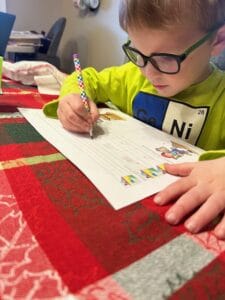
We started at a little table in our living room. My daughter would do her schoolwork there, but it was also her do-it-all table. We used it for crafts, activities, and play.
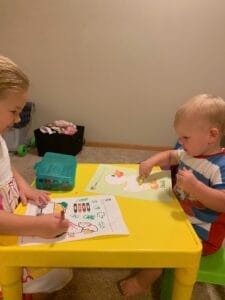
When we moved, we put the table in a small area of our playroom. It became our little school space. This worked great because my son could play nearby while I worked with my daughter.
Then I had my third child, and my daughter started to outgrow the little table. It was time to change our homeschool space again.
We moved upstairs to the kitchen table. We did most of our schoolwork there because my youngest could play in the living room, and I could still see him.
But after a while, that stopped working for my daughter. There was too much noise, and she often went to her room to work. So, once again, we made a change.
We bought her a desk and put it in our guest room. I could get her started on her work at the desk and then go into the playroom to do school with my son. My youngest could play safely nearby while I worked with him.
Then we moved into a small apartment!
That brought a whole new challenge for our homeschool organization. Now, we do most of our homeschool work at the kitchen table. My daughter also has a small lap desk she can take into her room when she needs a quieter place to work.
All of this to say, I’ve learned a few things about creating a physical space for homeschool:
- Find a space and use it. You don’t have to know if it will work forever. Try it, and then reevaluate as your children grow and your family’s needs change.
- Find some good storage. Shelves, cabinets, drawers, and other simple storage can help keep your homeschool materials contained and where you need them.
- Create a safe “yes” space for younger children nearby. If you’re homeschooling multiple ages, having a safe place for little ones to play can make a huge difference. They can play while you focus on teaching your older children.
Your homeschool space doesn’t have to stay the same from year to year. Good homeschool organization should grow and change right along with your family.
Questions to Ask About Your Homeschool Space
As you think about your own physical homeschool space, ask yourself:
- Where does our family naturally gather?
- Where do my children focus best?
- Which supplies do we use every day?
- Where can messy activities happen?
- Do we really need more furniture, or can we use what we already have in a different way?
You don’t need the perfect answer to every question. Start with what makes sense for your family right now. You can always change it later!
Creating a Homeschool Space on a Budget
You don’t have to spend hundreds of dollars to create a great homeschool space.
Check Facebook Marketplace for used furniture. I once found an old kitchen table for very little money, and we used it as our art table for years!
Consignment stores are another great option. Our very first little homeschool table came from one.
You can also check with local homeschool groups, both in person and online. Families often have shelves, desks, books, and other homeschool items they no longer need as their children grow.
And don’t forget about DIY projects! Social media can be a great place to find simple ideas for using what you already have.
The goal of homeschool organization isn’t to create the prettiest homeschool room. It’s to create a space that works for your family.
If you want more help setting up your homeschool, I share these ideas and many more in my ebook, Foundations for Homeschooling Toddlers and Preschoolers. Inside, we’ll look at creating your homeschool space, building routines, and finding what works for your family.

Key 2: Organize Your Time With a Rhythm, Not a Perfect Schedule
What Does a Homeschool Day Look Like?
When you first start homeschooling, you may think you need a strict schedule to get all your schoolwork done. But that isn’t the reality for most homeschool families.
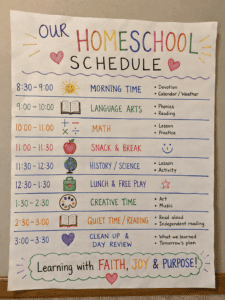
I do know a few homeschoolers who use a timed schedule, but most families I know follow a daily rhythm instead. They may start school around the same time each day and complete subjects in a certain order. But they aren’t watching the clock for every subject.
For example, you don’t have to say, “Bible is at 9:00, language arts starts at 9:30, and we have to switch to math at 10:00.”
One of the perks of homeschooling is that you can move at your child’s pace. A math lesson that takes 45 minutes in a classroom may only take your child 20 minutes at home. There is no reason to fill the rest of that time just because your schedule says math isn’t over yet!
Our General Homeschool Rhythm
We use a daily rhythm with what I call touchpoints throughout the day.
Touchpoints are parts of our day when my kids know exactly what is going to happen. To be honest, most of ours revolve around food! Sometimes the quickest way to reset a child is with a snack or meal. They may just be hangry!
Here is our general flow:
Wake Up → Breakfast → Free Play → School → Snack → Outside/Activities → Lunch → Rest → Afternoon → Dinner
We move from one part of our day into the next without worrying too much about exact times. However, meals and snacks happen around the same time each day.
These touchpoints give my kids some predictability. They know what is coming next, even if everything between those points looks a little different each day.
That predictability helps give them the security they need to learn and thrive.
Non-Negotiables vs. Negotiables
Another big part of our homeschool organization is something we call non-negotiables and negotiables.
This helps me create boundaries while still giving us the flexibility that I love about homeschooling.
Non-negotiables are the things that need to happen that day.
Negotiables are the things my kids can have some choice over, such as how or when something gets done.
Here are a few examples:
Non-negotiable: We are going to do school today.
Negotiable: Which subject we start with.
Non-negotiable: Everyone has rest time.
Negotiable: How they spend that rest time. They may read, play quietly, or choose another quiet activity.
The negotiables give my kids a voice in their day. They get to make choices and learn how to manage some of their own time.
This can help build independence and problem-solving skills. At the same time, the non-negotiables give our day structure and help my kids know what to expect.
You don’t have to choose between structure and flexibility. You can have both!
Practical Tips for Organizing Your Homeschool Day
Here are a few simple things that have helped our days run more smoothly:
- Give five-minute warnings. Let your kids know when a transition is coming instead of suddenly asking them to stop what they’re doing.
- Use timers. A timer can make transitions easier, especially for younger children.
- Use meals and snacks as natural touchpoints. Breakfast, snack, lunch, and dinner can help divide your day into predictable parts.
- Keep the general order of your day consistent. The exact time doesn’t have to be the same every day.
- Let your children know what comes next. Toddlers and preschoolers especially benefit from knowing what to expect, but I’ve found that older kids do, too.
- Leave room for real life. Appointments, outings, hard lessons, tired kids, and unexpected events will happen. Your rhythm should be able to bend when you need it to.
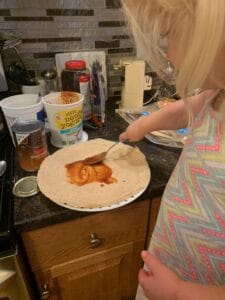
Remember, your homeschool schedule doesn’t have to look like a classroom schedule. Your homeschool organization should make your day easier, not give you another set of rules to follow.
Want to see what our homeschool rhythm actually looks like in real life? I share our full routine inside Foundations for Homeschooling Toddlers and Preschoolers, including how I balance different ages, school time, free play, meals, rest time, and outings.
Key 3: Organize Your Stuff With Systems You Can Maintain
Simple Homeschool Organization Beats Complicated Organization
If you search for homeschool organization items, you will find so many options! There are cute organizers and hundreds of ideas for storing all your homeschool stuff.
You can use filing cabinets, rolling carts, clear tubs, reusable bags, baskets, drawers, and more. There are so many choices that trying to get organized can start to feel overwhelming!
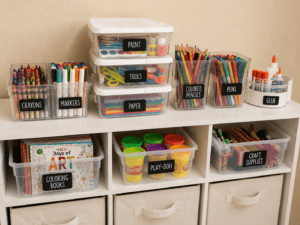
I have a few staples that I love, and you can find them on my Amazon Storefront: Homeschooling Items.
But before you buy anything, look around your house.
What do you already have that you could use?
I did this with a marker set I bought. I couldn’t find the right container for all the markers. Instead of buying something new, I found a tub we already had and used that. It was easy, and it saved me money!
Good homeschool organization does not mean you have to buy all new storage. Sometimes the best solution is already sitting in your house.
Make Your Storage Fit Your Space
Once you know what you already have, take a look at your homeschool setup.
Do you have a lot of storage space? Or do you need to get creative with the space you have?
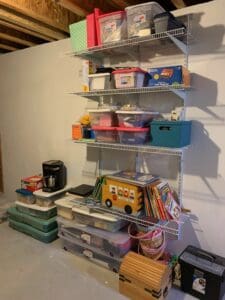
At our last house, my husband built a shelving unit in our basement storage area. I could put all of our extra homeschool supplies down there, and it was so helpful!
Our current home is very different. We don’t have a lot of extra storage space, so we use our china cabinet for homeschool supplies. It may not have been made for homeschool organization, but it works!
I also have a rolling cart that has changed with us. At our last house, I used it for art supplies. Now, I use it for manipulatives and school supplies that we need close by. You can find the rolling cart I use on my Amazon Storefront: Homeschooling Items.
We also have a printer cart that holds more of our homeschool supplies.
Right now, I have to get creative with storage. We don’t have a lot of space, and I also have a baby who wants to pull everything out! That means some of our homeschool organization has to be behind closed doors or out of reach.
And that’s okay. The system works for the season we’re in.
Give Everything a Home
One of my biggest homeschool organization tips is to give your supplies a home.
This is especially important for the messy stuff!
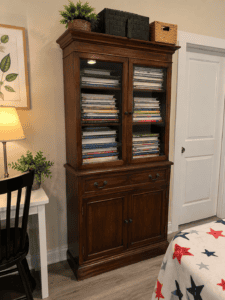
In our last house, I kept many of our messy school supplies in the laundry room or basement storage area. In our current home, they are stored in a closed closet and our china cabinet.
Having a set place for these items makes cleanup much easier. I know where to put everything when we’re done, but I can still get to it when we need it.
Keep it simple and use what you have!
You don’t need to buy a ton of storage items to have good homeschool organization. Start with the bins, shelves, cabinets, drawers, and other storage spaces you already own. Use them to their fullest potential before adding something new.
Your organization system doesn’t have to be pretty. It just has to work for your family.
Three Keys to Remember About Homeschool Organization
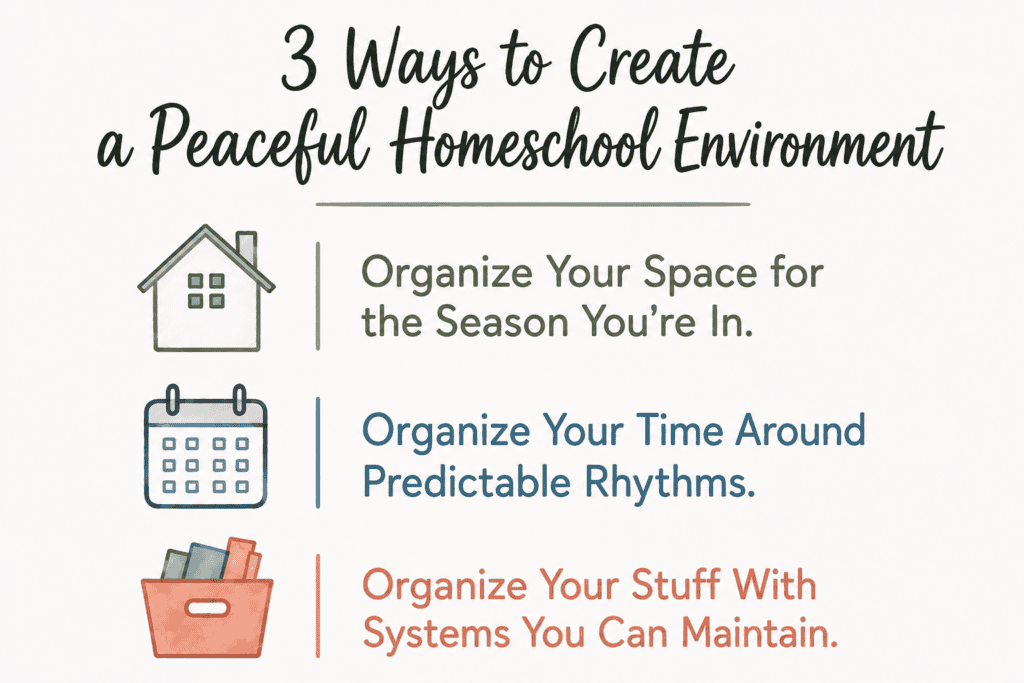
Homeschool organization doesn’t have to be complicated. Remember these three simple things:
1. Organize Your Space for the Season You’re In
Use the space you have, whether that’s a homeschool room or your kitchen table. You can always change it as your family grows.
2. Organize Your Time Around Predictable Rhythms
You don’t need to schedule every minute. Create simple touchpoints throughout the day so your kids know what to expect.
3. Organize Your Stuff With Systems You Can Maintain
Give your homeschool supplies a home and use the storage you already have. Most of all, keep it simple!
Final Thoughts on Homeschool Organization
Homeschool organization is going to look different for every family. What works for you today may not work next year—or even next month!
Our homeschool has changed many times over the years. We have used little tables, desks, playrooms, kitchen tables, and lap desks. Our routines and storage have changed too. We simply keep adjusting as our family grows.
So don’t worry about creating the perfect homeschool room, schedule, or storage system. Start with what you have and make it work for your family. You can always change things later!
If you are homeschooling little ones and want more help getting started, check out my Foundations for Homeschooling Toddlers and Preschoolers. I share even more practical ideas to help you create a homeschool that works for your family.
And remember, homeschool organization isn’t about making everything look perfect. It’s about making your homeschool work for you!