This post contains affiliate links please see the Disclosure and Privacy Policy page for full disclosures here.
Embarking on the journey of homeschool goal setting can initially feel challenging and even seem ridiculous, but it holds immense benefits for your homeschool. These goals can guide you and influence your planning and the execution of your child’s learning. Moreover, they provide a valuable tool for evaluating the year’s progress and identifying necessary adjustments for the future. As you set your child’s homeschool goals this year, here are essential factors to consider.
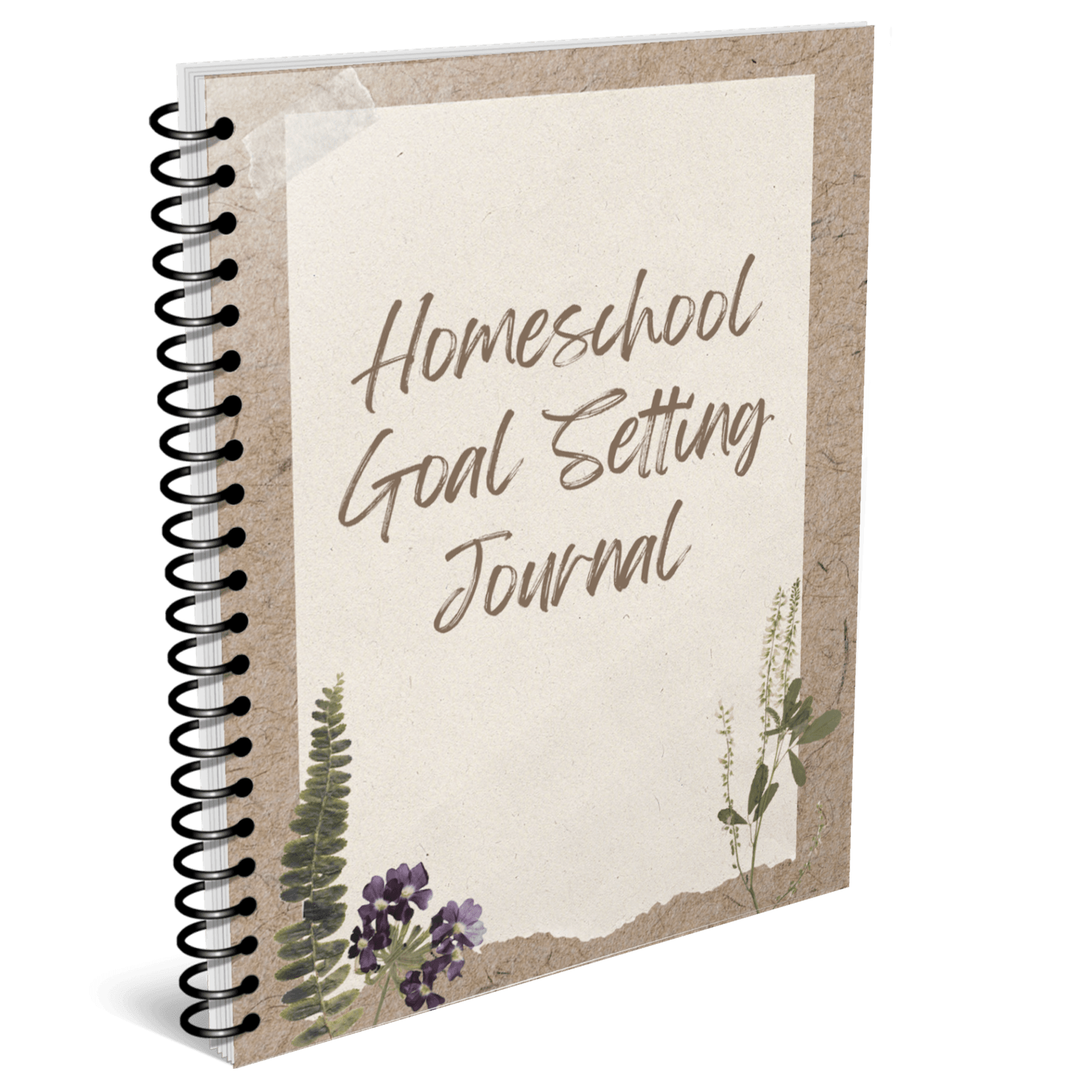
At the conclusion of each section, you’ll find thought-provoking questions to guide you as you craft personalized goals for your child. If you prefer a journal format to document your goal-setting journey, simply click below to access it and begin your enriching experience!
State Guidelines
Before diving into the process of writing homeschool goals, it’s crucial to check whether your state or country has specific guidelines in place. This is the first place to start looking as you write out your homeschool goals for each child. If you are in the US you can look up your state laws from HSLDA (Home School Legal Defense Association) here. I would print out these guidelines if you have them in front of you as you formulate your goals.
Practical Questions
- What does my state/country require for homeschool in regards to hours, number of days, subjects, or credits?
- What does my state/country require in regards to registration, reporting, testing, or portfolio reviews?
- Do I need to meet any specific requirements to teach my child?
- How are any assessments performed for the state/country?
- What records do I need at the end of the year?
- Are there any age or grade specific guidelines I need to know?
- Can I modify my child’s homeschool goals throughout the year?
- Have I filled out all the forms that are required by my state/country?
General Age Guidelines
The next crucial step is to consider your child’s age and current academic level or “grade.” This will help you access specific grade or age-appropriate guidelines, providing insight into the typical knowledge and skills expected for a child entering and leaving a certain grade, like first grade. However, keep in mind that many of these guidelines are designed for traditional school settings, so approach them with a grain of salt. While they serve as valuable starting points, your child’s abilities may already surpass or fall within different levels. Embrace the flexibility of homeschooling, tailoring the learning experience to suit your child’s unique pace and strengths.
Practical Questions
- What does my child need to know going into their grade?
- What does my child need to know leaving their grade?
- How close or far is my child from meeting these grade guidelines?
- What are my child’s interests?
- What are my child’s strengths?
- What are my child’s weaknesses?
- Is there anything my child wants to explore?
- Are there any special needs for my child?
- How do this special need play into my child’s learning or activity?
Last Year’s Goals/Learning
Next, take a moment to reflect on your child’s progress from the previous year and their overall growth. If you had set goals last year, revisit them and assess their achievements. If your child effortlessly reached those goals, consider setting higher ones this year. On the other hand, if your child faced challenges in reaching the goals, it might be helpful to adjust them or identify any contributing factors. If you didn’t have specific goals last year, evaluate what your child learned and their growth in each subject to inform your homeschooling objectives for the upcoming year.
Practical Questions
- What were my child’s goals last year?
- Did they meet their goals?
- If they did NOT meet them, then why?
- If they did meet their goals, how much past their goals did they go?
- What were their strengths last year?
- What were their weaknesses last year?
- What were my child’s interests last year?
- What learning strategies or techniques worked best last year for my child?
- What does my child think of their learning last year?
- What non-educational skills did my child master last year?
- What non-educational skills did my child NOT master last year that I wanted them to master?
Subjects for Learning
In setting your child’s homeschool goals, it’s essential to consider the subjects you want to incorporate into their education. You have the flexibility to focus solely on academic subjects or introduce additional enriching subjects. Begin by listing the mandatory subjects required by your state or country’s guidelines. Then, explore the exciting extras you’d like to include, such as learning an instrument, dancing, baking, cooking, learning auto-shop skills, sewing, sports, singing, and more. Embrace the opportunity to create a well-rounded and personalized learning experience that caters to your child’s interests and passions.
Practical Questions
- What subjects does your state/country mandate?
- What subjects do you want to add?
- What are my child’s interests and what subject categories do they fit into?
- Are there any subjects that cross over with another subject?
Write the Goals Out
Congratulations, you’ve reached the exciting writing stage! Now, it’s time to select a few goals inspired by the thoughtful questions asked earlier. Create a list of subjects for the year and jot down one or two draft goals per subject. Afterward, revise and fine-tune these goals using the following guiding questions:
Practical Questions for Each Goal
- Is my goal specific in wording?
- Is there a way I can assess the goal?
- Does the goal align with my child’s strengths and weaknesses?
- Do I include any specific accommodations or additional support that will be needed to meet the goal?
- Do I include the length of time needed to meet the goal?
- Did my child have any input into the goal? What is their input?
Once you have answered all those questions, edit your goals and rewrite them out for you and your child to look at throughout the year.
Evaluation
As the year comes to a close, it’s essential to evaluate your child’s homeschool goals. If you haven’t already, print out the goals and take a moment to answer these reflective questions. Make notes of your observations and insights so that you can reference them when setting goals for the upcoming year. This evaluation will help you celebrate accomplishments, identify areas of growth, and make informed decisions for an even more successful goal-setting process in the future.
Practical Questions
- Did my child hit all their goals?
- What prevented them from hitting any goals?
- Were any of the goals too easy? Too hard?
- What subjects or areas did my child grow the most during the year?
- What subjects or areas did my child grow the LEAST during the year?
- Did my child find the goals motivating or engaging? If so, how?
- How did their interests effect the goals?
- Did their interests change during the year? If so, how?
- What strategies or methods or activities worked the best to meet the goals?
- How did the goals impact my child’s overall homeschool motivation and learning?
- What are my child’s thoughts on the goals?
- When my child achieved a goal did that foster a senes of accomplishment and pride or did it not? How?
- What adjustments should be made for next year?